
Zhangjiakou Fortress Guide: Buzili Old Town, Trade Streets and Museum Stops
Zhangjiakou Fortress is the historic core from which the modern city of Zhangjiakou grew. Locals commonly call the district Buzili. It is not a sealed, perfectly reconstructed old town, and that is exactly why it deserves a thoughtful visit: walls, lanes, temple precincts, former banks, merchant premises, and ordinary city life sit close together. A good visit here is less about rushing through a gate and more about learning to read a real border-market city.
The fortress was first built in 1429, during the Ming dynasty, as a garrison settlement. The Hebei Provincial Cultural Relics Bureau records surviving dimensions of about 590 metres east to west and 327 metres north to south. Its historic east and south gates were known as Yongzhen and Chengen. The plan was military in origin, but the district later acquired another identity: after the 1571 Longqing peace agreement, cross-border market activity expanded and the streets accumulated the physical evidence of commerce, finance, religion, and cultural exchange.
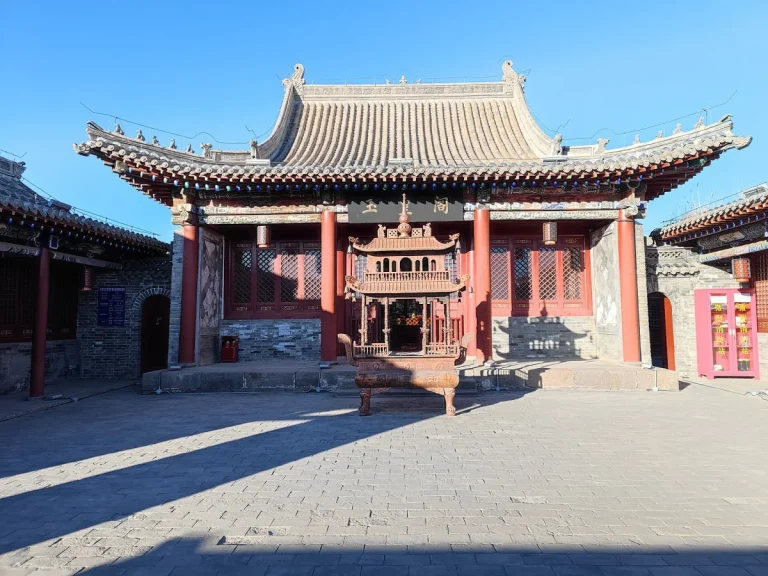
What Buzili is, and what it is not
For first-time visitors, the most useful expectation is simple: Buzili is historic urban fabric within a living city. Some streets and individual buildings reveal their past immediately; other parts require more patient looking, and not every old-looking doorway is open to visitors. Avoid treating private courtyards as photo sets or assuming that every preserved facade contains a public museum. The fortress was placed on China’s national list of protected cultural-relic sites in 2013, but protection does not turn a neighborhood into a theme park.
That distinction also makes the area more rewarding. Rather than measuring a visit by how many attractions you tick off, look for the relationship between the old defensive line, temple structures, former financial buildings, and narrow commercial lanes. This is a place for daylight walking, careful observation, and current information. Opening arrangements, road works, repairs, and access to individual buildings can change, so confirm same-day notices before travelling.
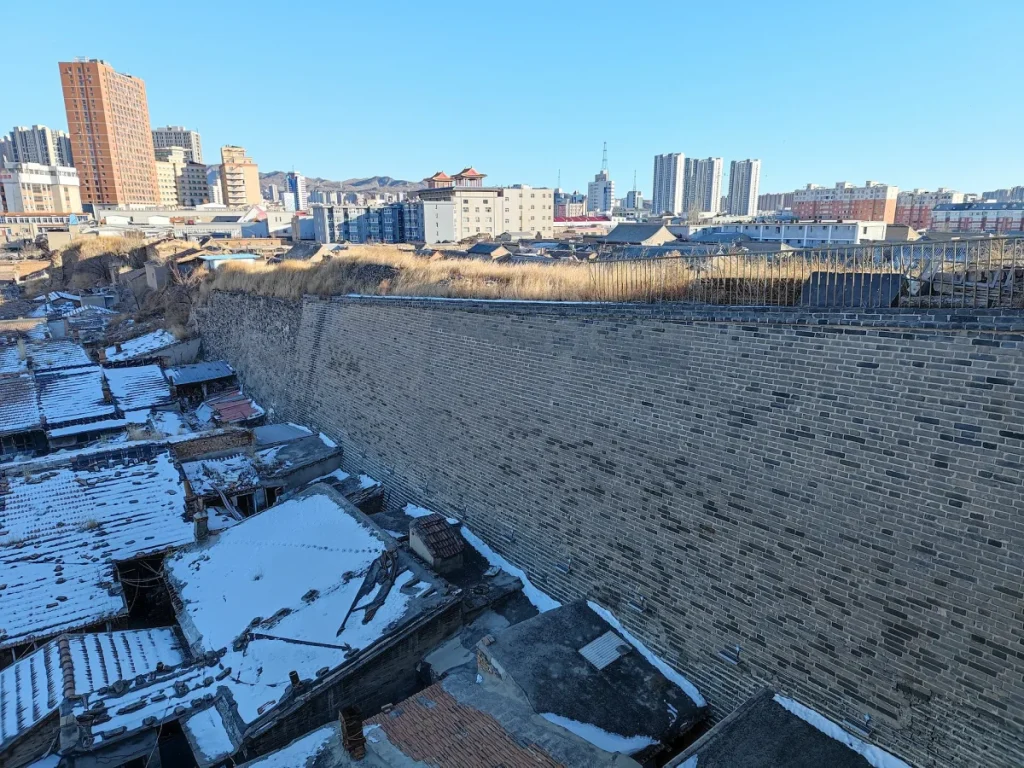
Read the walls before looking for a continuous rampart
The surviving walls are best understood as fragments of a much larger defensive system, not as a single uninterrupted walk comparable to a major tourist section of the Great Wall. The official heritage account notes walls, Yuhuang Pavilion, academies, an opera stage, a Guandi Temple hall, and former government, merchant, bank, and foreign-firm buildings among the district’s preserved elements. Some are easier to recognize from the street than others. A slow circuit is more useful than a hurried search for one dramatic viewpoint.
Start with a broad view whenever you find one, then look at construction details. The thickness and line of a wall, a change in street level, or the way later shopfronts meet older masonry can tell you more than a generic city panorama. Do not climb, enter closed areas, or treat a defensive remnant as a viewing platform. Heritage photography works best here when it records what is actually present, including later layers, rather than trying to make the district look untouched.
Trade streets, banks, and the border-market story
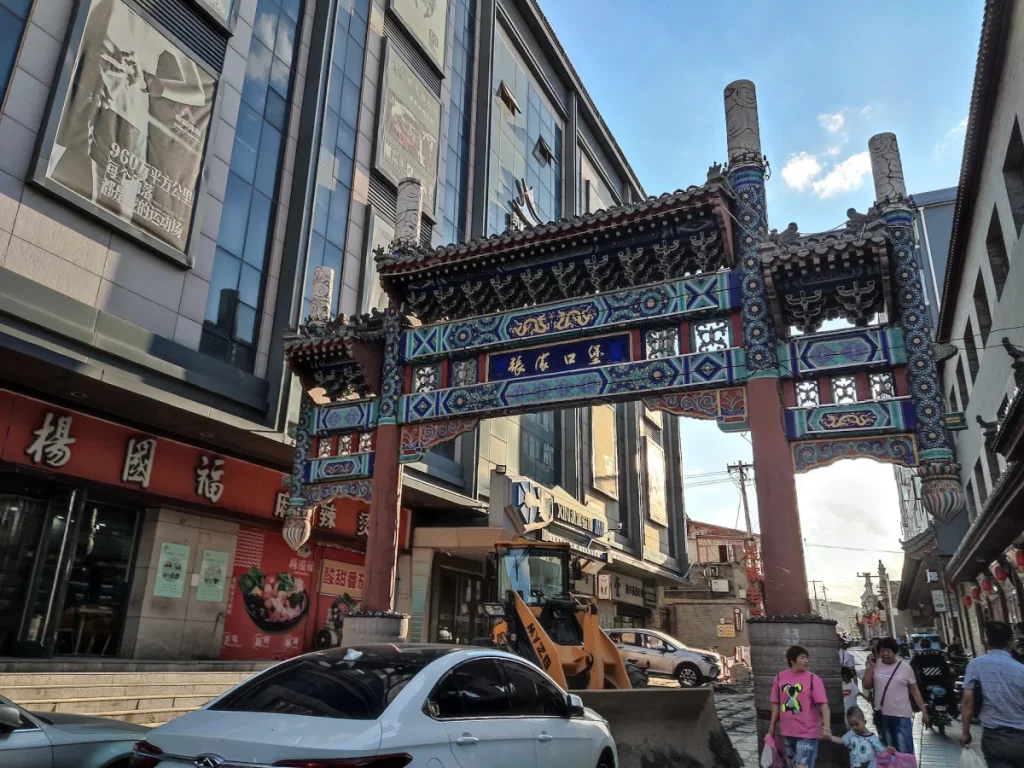
Zhangjiakou’s importance was shaped by its location at a historic northern gateway. The Hebei heritage record says that after 1571, trade developed through the fortress and left behind commercial houses, draft banks, money houses, and foreign firms. This is a more precise way to describe Buzili than calling every lane an ancient shopping street. The surviving buildings point to the institutions that allowed goods, credit, people, and information to move through a frontier city.
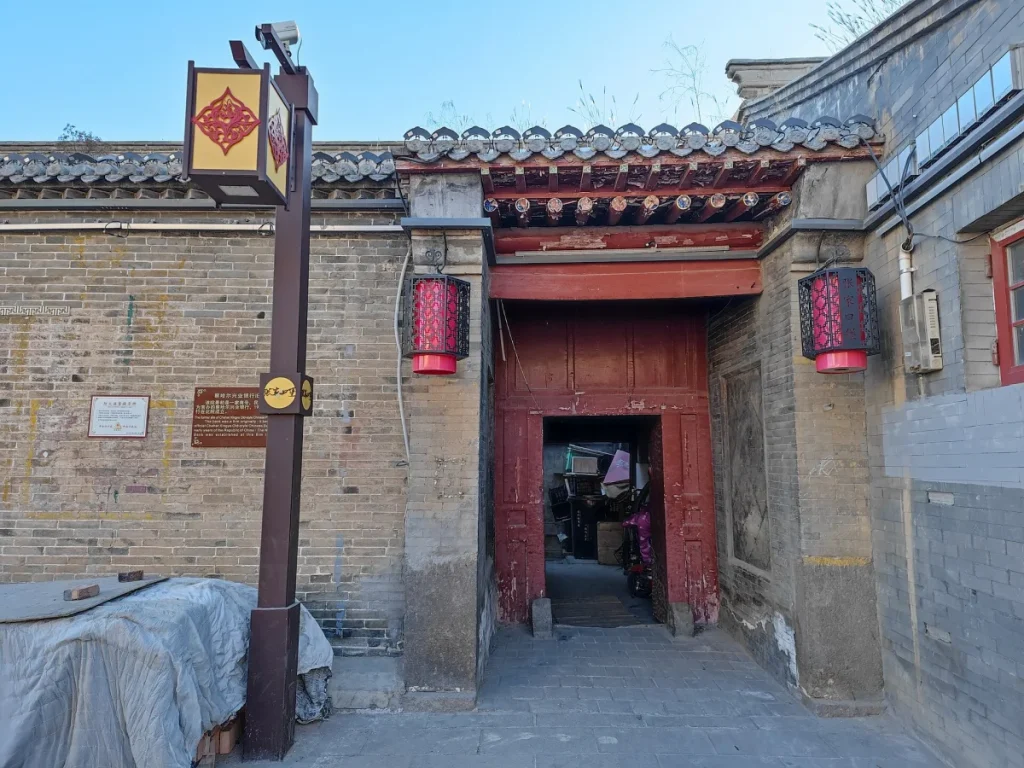
Look especially for former financial premises. Their facades are often quieter than the largest temple buildings, but they are central to the story. They show that the city’s history was not only military. When you see a bank building or merchant house, avoid guessing its original function from decoration alone; use onsite interpretation where available and cross-check named sites with the official museum material. This produces a much more accurate itinerary than repeating broad Silk Road or Tea Road labels without local evidence.
Museum stops worth checking on the day
The official Zhangjiakou Fortress Museum listing places the museum at No. 2 Shuyuan Lane. It describes three exhibition components: a financial gallery in the former Xingji Bank site, a leather-culture museum in the former Zhongying Office, and an old-photograph gallery. These are useful stops because they connect the architecture to the activities that once took place here. They also keep the visit grounded in documented local material rather than broad regional generalizations.
Do not treat an online listing as a promise that every room will be open. Check current official announcements or ask at the site before building a tight schedule around an interior visit. If a museum is closed, the fortress can still justify a walk: study the exterior, look for the building’s relationship to its lane, and use the closure as a reason to slow down rather than force entry into another unrelated attraction.
A practical half-day route
- Begin in daylight at the fortress streets: get oriented first and identify any current heritage notices, road restrictions, or museum signs.
- Find a surviving wall section and Yuhuang Pavilion: use them to understand the military and religious layers of the district.
- Follow the trade story: seek out the former banking and merchant buildings, reading public interpretation rather than entering private premises.
- Visit the museum only if current access is confirmed: the financial, leather, and old-photo displays add context when open.
- Leave time for one separate Zhangjiakou site: do not combine every landmark into one rushed day.
The wider city works best in clusters. Pair Buzili with the Dajingmen Great Wall guide if you want a stronger frontier and wall context, but give each its own time. The Zhangjiakou from Beijing guide is useful for a broader first visit, while the Beijing to Zhangjiakou train guide covers the intercity rail leg. For another old-city day, Xuanhua Ancient City is better treated as a separate destination than as an extra item squeezed into this walk.
How to visit respectfully
- Keep to public routes: Buzili includes active streets and private buildings, so do not step into courtyards or doorways without clear permission.
- Use current practical information: verify museum access, local transport, construction, ticketing, and any photography rules on the same day.
- Do not romanticize deterioration: treat walls and older facades as protected heritage, not props for climbing or staged images.
- Give the area enough time: a measured half-day is more useful than a rapid photo stop between distant attractions.
- Follow local instructions: staff notices and conservation barriers take priority over an old itinerary or online map.
Official references and current checks
For the fortress’s Ming foundation date, dimensions, surviving buildings, and post-1571 commercial development, consult the Hebei Provincial Cultural Relics Bureau heritage record. For the museum’s location and its financial, leather-culture, and old-photograph components, see the official Zhangjiakou Fortress Museum listing. These official records support the historical context; check current official local notices for same-day visitor arrangements.
Zhangjiakou Fortress is most satisfying for visitors who want to understand how a frontier settlement became a trading city. Its best details are not always the loudest ones: a wall fragment, a lane, a former bank, a pavilion, or a carefully labeled museum room. Walk it slowly, keep the history specific, and let the real streets set the pace.
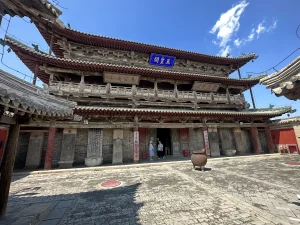
Yuzhou Ancient City Guide: Yuhuang Pavilion, Nan’an Pagoda and a Half-Day Walk
Walk through Yuxian's old city from Yuhuang Pavilion to Nan'an Pagoda, with architectural details, a half-day route and…
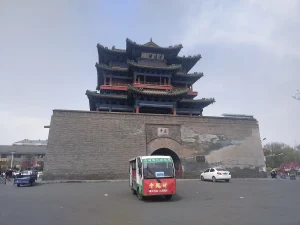
Xuanhua Ancient City Guide: Qingyuan Tower, Old Streets and Zhangjiakou Trip Tips
Plan Xuanhua Ancient City in Zhangjiakou with Qingyuan Tower, old streets, train links, grape heritage, Dajingmen pairing, seasons,…
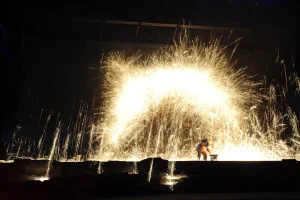
Nuanquan Ancient Town and Dashuhua Guide: Yuxian Fortress Walks and Fire-Flower Shows
Plan Nuanquan Ancient Town in Yuxian with Xigubao walking context, Dashuhua fire-flower show checks, respectful viewing advice, and…
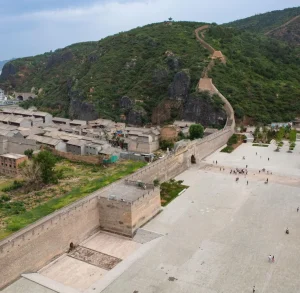
Dajingmen Great Wall Guide in Zhangjiakou: Gate, Trade Route and Beijing Train Tips
Plan Dajingmen in Zhangjiakou with Great Wall history, Zhangku trade route context, Beijing train links, walking tips, seasons,…

Zhangbei Grassland Road Guide: Grass Skyline, Wind Farms and Zhangjiakou Weekend Tips
Plan Zhangbei Grassland Road in Zhangjiakou with self-drive timing, grassland scenery, wind farms, Beijing links, seasons, hotels, and…
Congtai Park Handan Guide: Wuling Terrace, Seven Sages Shrine and City Walk
Explore Congtai Park in central Handan: Wuling Terrace, the Seven Sages Shrine, lake paths, Zhao history and a…