
Congtai Park Handan Guide: Wuling Terrace, Seven Sages Shrine and City Walk
Congtai Park is an easy place to begin understanding Handan without committing your first day to a distant county attraction. A brick terrace and pavilion associated with the ancient state of Zhao rise above a lake; a shrine introduces some of the people behind Handan’s best-known stories. Locals also use the grounds as an everyday green space, so the experience is part history walk and part ordinary city life.
For a first visit, allow roughly 90 minutes to two hours for the terrace, Seven Sages Shrine and lake paths. That is a planning estimate, not an official route duration. You can move faster if you only want a park walk, or stay longer if interior access, interpretation and photography matter to you.
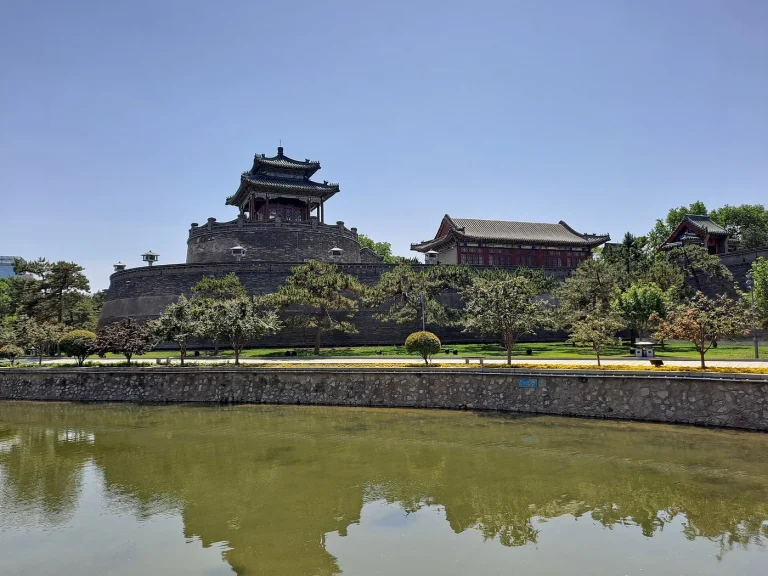
What is Wuling Congtai?
Use 丛台公园 (Congtai Park) for the park and 武灵丛台 (Wuling Congtai) for its principal historic terrace. The name refers to King Wuling of Zhao and Handan’s Warring States past. The landmark is an important piece of the city’s historical identity, but the visible structures have been rebuilt and repaired through later periods. Do not mistake every roof, wall or decorative detail in today’s photographs for untouched Warring States fabric.
Hebei’s cultural-heritage register lists Wuling Congtai as a provincial protected site with Warring States, Ming and Qing historical layers. This is a useful way to read what you see: an ancient association, a long record of reconstruction, and a public park still used by the modern city. The story of King Wuling’s hufu qishe reform—adapting clothing and mounted-archery practices—is worth understanding, but a park visit is not a substitute for an archaeological account of every surviving wall.
Approach the terrace from ground level before climbing, if the stairs are open. From below, the tiered brickwork and pavilion are easiest to read as one composition. If you go up, pause at each level rather than racing to the top: the changing sightlines explain why the structure became a Handan emblem. Access to the upper level can be restricted for maintenance or crowd control, so treat the view as a possibility, not a guarantee.
A sensible walking order inside the park
1. Start with the terrace and its surrounding paths
The terrace is the natural orientation point. Look at it from the path as well as from the lakeside; the two perspectives show different relationships between the monument, trees, water and present-day high-rises. This contrast is more revealing than a close-up photograph that hides the modern city.
The steps and raised areas deserve care after rain and in hot weather. Anyone who cannot comfortably climb can still see the main structure from the lower paths. Do not assume that all of the park’s historic interiors are open simply because the outdoor gates are open.
2. Give the Seven Sages Shrine its own stop
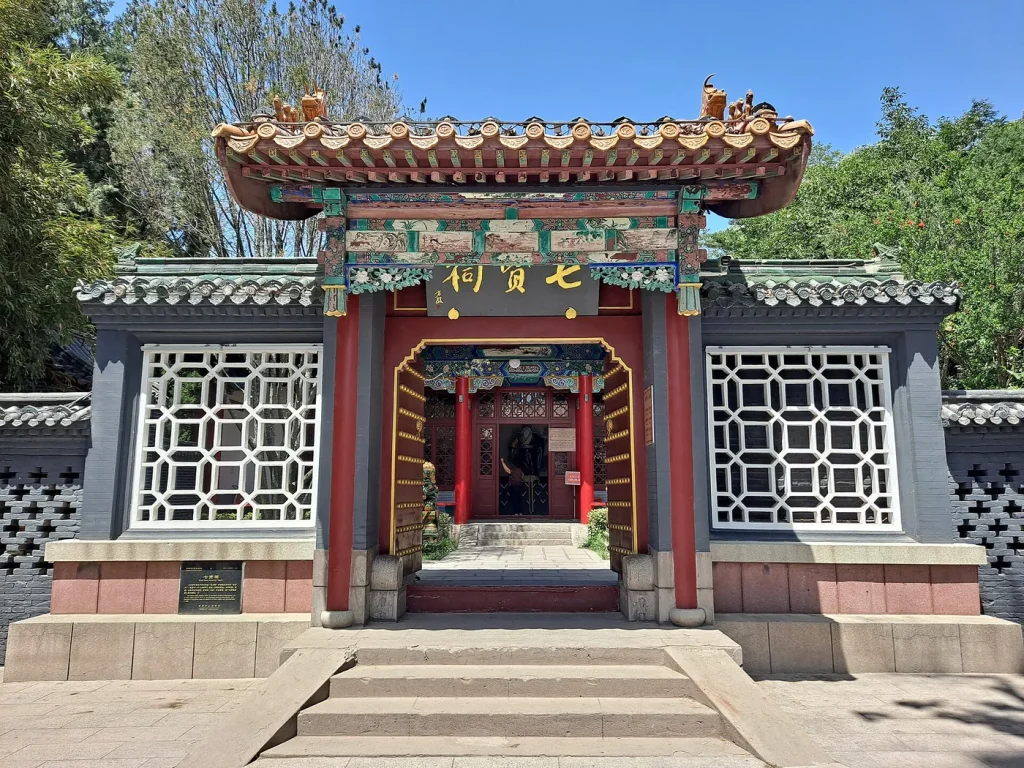
North of the terrace, 七贤祠 (Qixian Ci, the Seven Sages Shrine) commemorates figures associated with the Zhao stories and the wider Spring and Autumn and Warring States world. Official Handan reporting mentions the shrine alongside Congtai and connects it with the well-known jiang xiang he story of Lin Xiangru and Lian Po. Other figures commonly named here include Han Jue, Cheng Ying, Gongsun Chujiu, Zhao She and Li Mu.
Rather than memorizing seven names at the gate, read what is actually presented on site. Some figures belong to earlier Jin-state stories while others are Zhao figures; the shrine gathers exemplary narratives, not seven people who all met at this precise spot. If the hall is closed, the gate, painted beams and courtyard setting still make the stop worthwhile.
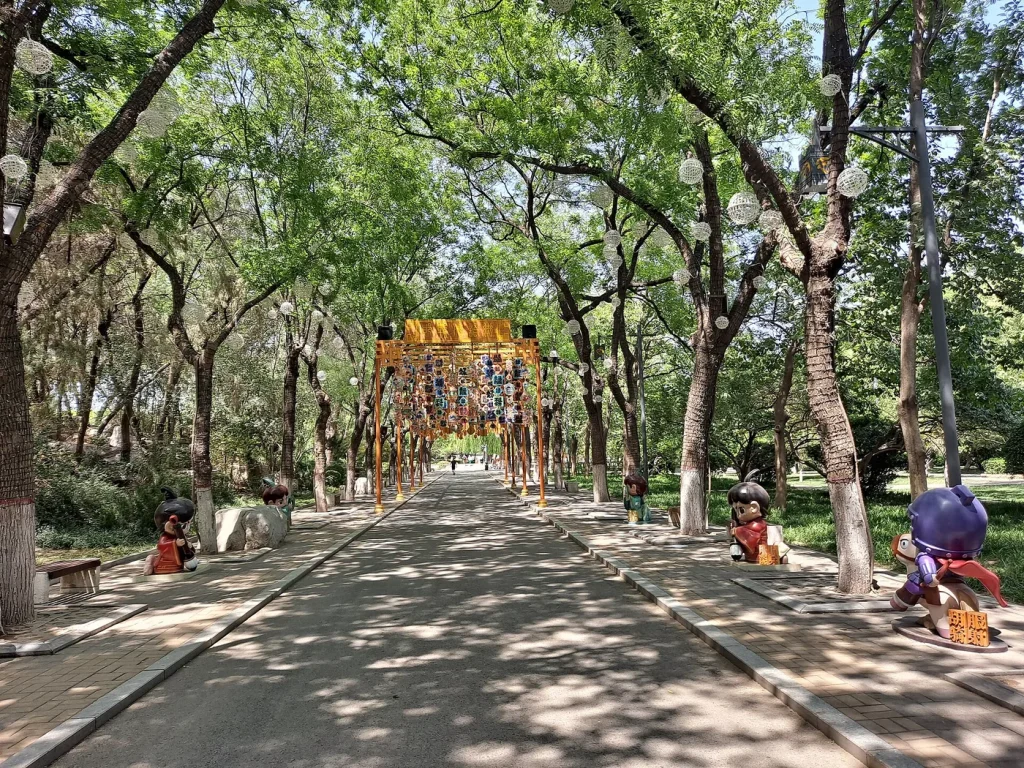
3. Follow the shaded paths, then circle the water
The park works best when you leave room between the named sights. Its tree-lined paths and cultural installations show how local visitors use Zhao history as part of a living civic park. Give way to families, older walkers and school groups; the route is not a private historic set.
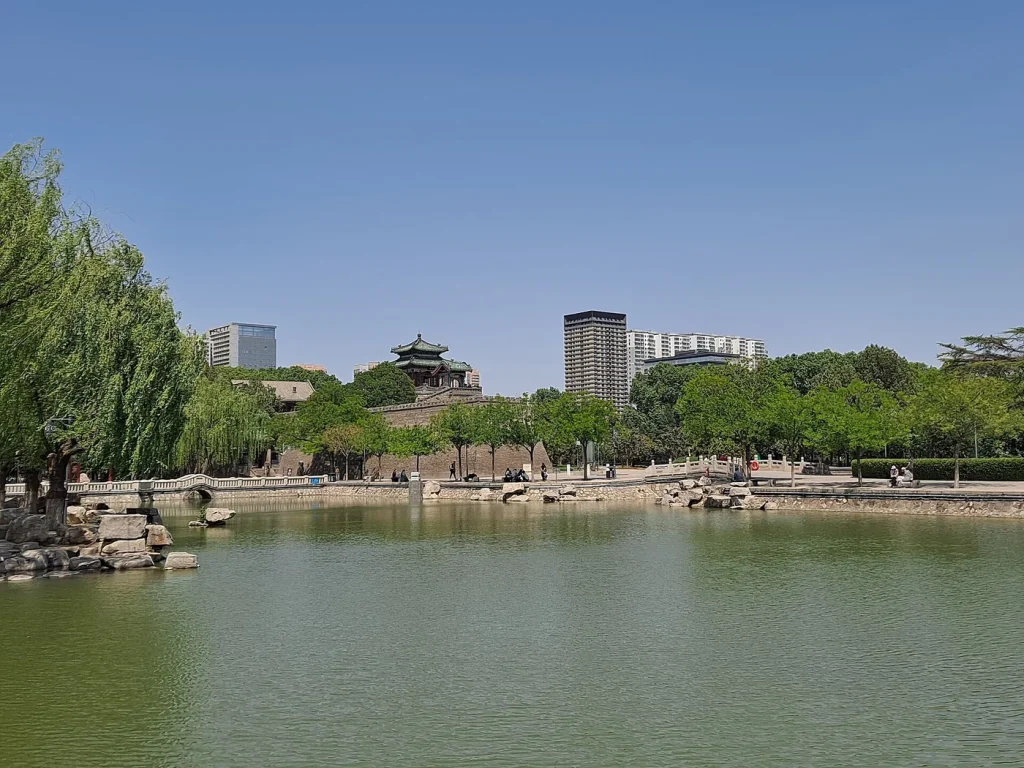
Finish at the lake to see the terrace at a little distance. Water and trees change the scale of the structure, while the buildings beyond make clear that this is central Handan, not an isolated archaeological site. Boat services, temporary displays and special lighting should be checked on the day; they are not essential to the basic visit.
Getting there from Handan’s stations
Congtai Park is in the central urban area on Zhonghua North Street. Save 邯郸丛台公园 in your map app and confirm the entrance you plan to use. From Handan Railway Station (邯郸站), a short city transfer is generally easier than building an itinerary around a particular bus route from an older article. From Handan East (邯郸东站), allow more transfer time: it is a separate high-speed rail station, not the same downtown station.
If you are arriving from Beijing, first check station names and real train times with our Beijing to Handan train guide. Keep a screenshot of the Chinese park name for a licensed taxi or app-booked car. Check the pickup point for your return journey before your phone battery runs low.
How to fit Congtai into a Handan day
Congtai is a compact city stop, not a substitute for all of Handan’s heritage. A manageable first day is the park, a meal and one other central-city walk. Our Handan one-day itinerary gives a broader starting point, but take care not to turn a calm park visit into an unrealistic list of county attractions.
For a separate excursion, Guangfu Ancient City explores a walled town and water landscape outside central Handan. Xiangtangshan Grottoes is a different, Buddhist-art-focused trip that deserves its own transport and visiting time. These links help you choose your next day; neither should be presented as a quick stroll from Congtai.
Tickets, timing and practical cautions
Information checked on 19 September 2026: published park listings do not agree on every opening hour or attraction-rating detail, and some distinguish free general park entry from access to the terrace or individual halls. I have therefore not given a fixed price or promised upper-terrace access here. Check current signage, the park’s official contact channel or a reliable live map before making a journey specifically to enter a hall or climb the terrace.
Daylight is the safest default for a history-focused first visit because it makes plaques, paths and architectural details easier to study. Evening lighting may look attractive, but a photograph taken after dark is not evidence that every interior is open at night. In summer, carry water and allow for exposed sections around the lake. In winter or after rain, watch for slippery steps.
The four photographs here are real on-site images taken in May 2025. They show the terrace, shrine, path and lake, but they cannot certify the condition of a gate, display or ticket policy on your own travel date. Each photograph has its Commons source and public-domain declaration in the caption; none is an AI-generated substitute for the destination.
Sources and further checks
- Hebei Provincial Cultural Heritage Administration: Wuling Congtai in the provincial heritage register and its historical layers.
- Handan Municipal Bureau of Commerce: recent local account of Congtai Park, the Seven Sages Shrine and Zhao stories.
- Hebei Department of Culture and Tourism: Congtai’s place in Handan’s contemporary city-and-heritage visitor area.
- Beijing tourism destination listing: park layout and named features; its operating details should not be treated as a current guarantee.
Check the park’s current entry and terrace arrangements shortly before travel. Route durations and pairings in this guide are editorial estimates.
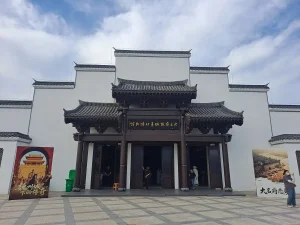
Daming Ancient City Museum Guide: Archaeology, Song-Era Context and a Thoughtful Handan Visit
Plan a thoughtful Daming County visit in Handan: Daming Ancient City Site Museum, archaeology, Song-era context, local streets,…
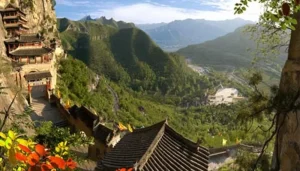
Wahuang Palace Handan Guide: Nuwa Temple, Cliff Pavilion and Shexian Route Tips
Plan a Wahuang Palace visit in Shexian, Handan, with Nuwa culture, cliff pavilion highlights, carved scriptures, transport logic,…

Guangfu Taijiquan Guide: Yang Luchan, Ancient City and Respectful Practice Visits
Visit Guangfu Ancient City in Handan for the Yang-style Taijiquan story: Yang Luchan context, city walls, cultural etiquette,…
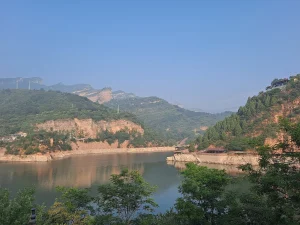
Jingniang Lake Travel Guide: Wu’an, Handan Routes and Boat Views
Plan Jingniang Lake near Wu'an and Handan with lake-and-cliff views, boat-area expectations, transport logic, weather advice and nearby…

Xiangtangshan Grottoes Handan Guide: Northern Qi Buddhist Caves, Route and Visitor Tips
Plan Xiangtangshan Grottoes in Handan with Northern Qi Buddhist cave history, Fengfeng route logic, cave highlights, timing, photo…
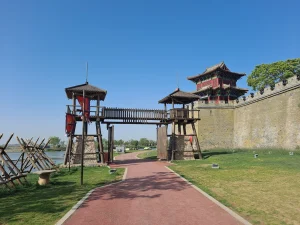
Guangfu Ancient City Guide in Handan: Water Town Walls, Tai Chi Roots and Beijing Train Tips
Plan Guangfu Ancient City in Handan with old walls, water-town scenery, Tai Chi heritage, Beijing train links, timing,…