
Xumi Fushou Temple Chengde Guide: Great Red Terrace, Panchen Lama History and Respectful Visits
Xumi Fushou Temple is one of Chengde’s Outer Temples, but it should not be treated as a quick add-on after the Mountain Resort. Its architecture rewards slower looking: a high terrace, painted timber, a glazed pagoda, formal courtyards, and details that connect Qing imperial patronage with Tibetan Buddhist visual traditions. A visit is strongest when you arrive with a little historical context and leave enough time to distinguish the buildings rather than only photographing their roofs.
The temple is sometimes translated as the Temple of Sumeru Happiness and Longevity. Spellings vary in English, so keep the Chinese name 须弥福寿之庙 with you when checking a map, a taxi destination, or a current visitor notice. It stands north of the Chengde Mountain Resort and east of Putuo Zongcheng Temple, within the wider Mountain Resort and Outlying Temples World Heritage property. That proximity makes pairing possible, but the sites have different architectural stories and should not be collapsed into one generic “Tibetan-style temple” stop.
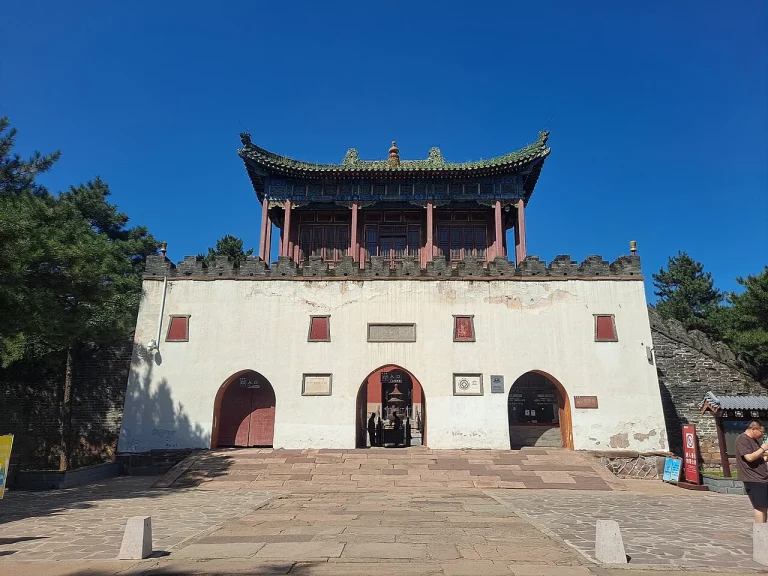
Why this temple was built
Xumi Fushou Temple was built in 1780 in connection with the visit of the Sixth Panchen Lama to Chengde for the Qianlong Emperor’s seventieth-birthday celebrations. That context matters, but it is better understood as history than as a decorative anecdote. Chengde was a major Qing imperial landscape where court ritual, diplomacy, religious patronage, and regional governance intersected. UNESCO describes the Mountain Resort and its Outlying Temples as a large imperial palace-garden and temple complex built between 1703 and 1792; Xumi Fushou belongs to that broader setting.
The temple is widely associated with Tashilhunpo Monastery in Shigatse, but it is not a literal copy to tick off in a comparison game. Notice how terraces, halls, color, roof forms, and circulation create a Chengde composition. The best question to ask is not whether every part looks “Chinese” or “Tibetan,” but how different architectural languages were assembled for a specific imperial and religious encounter.
Read the site from ground level upward
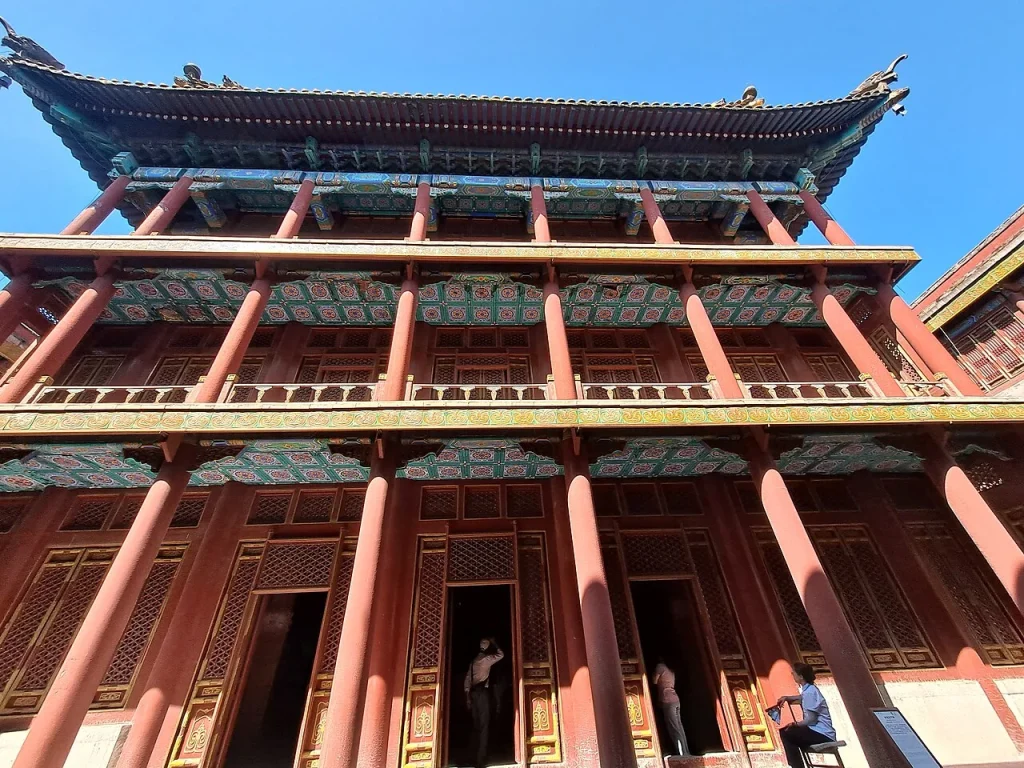
Begin with the approach and the scale of the terrace. The Great Red Terrace, often called Dahongtai, is the visual center of the complex: its mass, raised levels, and red-painted architecture change as you move through the courtyard. Do not rush directly to a high viewpoint. From ground level, look at the relationship between the entrances, retaining walls, painted woodwork, and the changing roofline above.
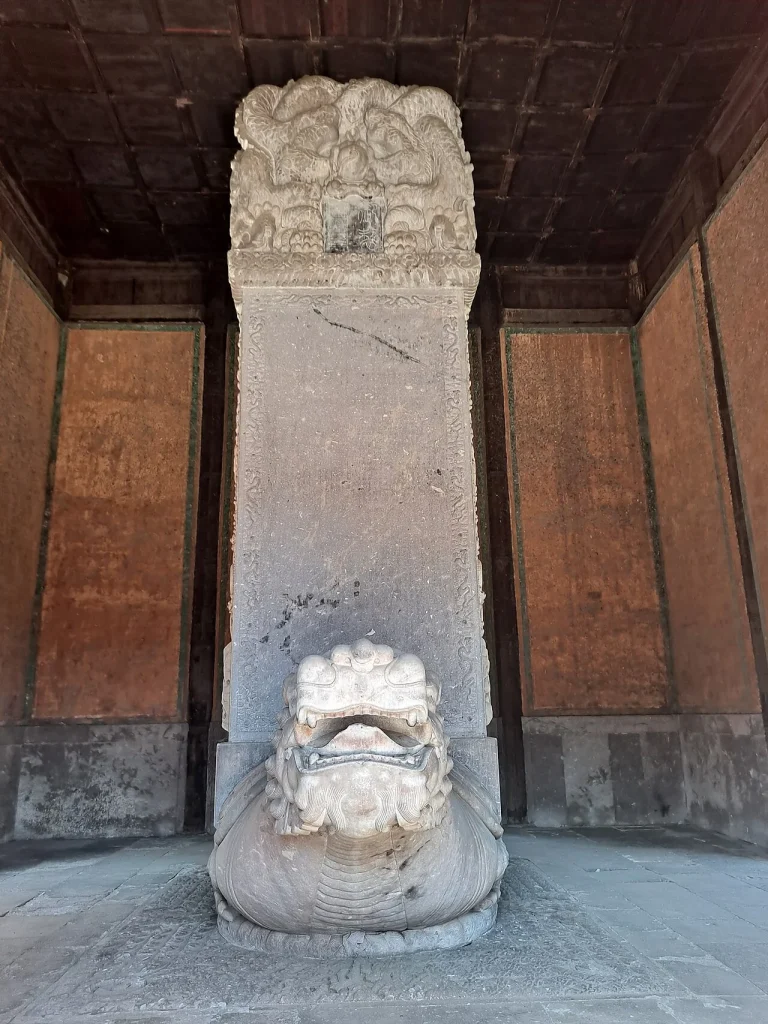
Then look for smaller evidence of craft and patronage. The glazed Longevity Pagoda, carved stone elements, inscriptions, and painted surfaces all carry information that a distant skyline photograph cannot. A 2018 Chengde Cultural Relics Bureau exhibition on Jixiang Faxi Hall drew on archival research and objects from several institutions, which is a useful reminder that the visible buildings are only part of the site’s historical record.
How it differs from nearby Chengde temples
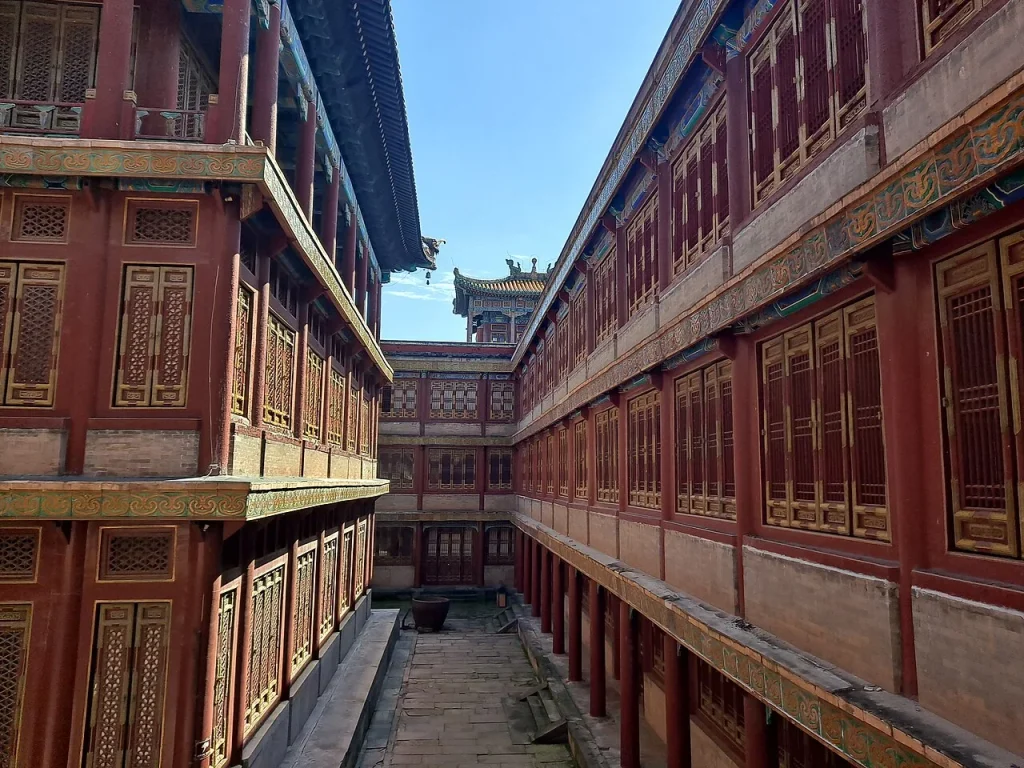
The Putuo Zongcheng Temple guide focuses on the vast hillside composition often nicknamed the Little Potala Palace. Xumi Fushou is nearby but calls for a different pace: its Great Red Terrace, enclosed courtyards, and more concentrated detail are the main reward. The Puning Temple guide adds another dimension through the huge Guanyin image and a different spatial sequence. Treat these as three distinct visits rather than three interchangeable pictures.
For a first Chengde trip, use the Chengde Mountain Resort guide to plan the city’s larger World Heritage context, and the Beijing to Chengde train guide for the rail arrival framework. Keep the Outer Temples in a separate block of time from the Mountain Resort. Trying to absorb both on a single rushed afternoon usually turns the trip into transfers and ticket queues rather than observation.
Plan around current preservation work
Historic buildings need ongoing conservation. In 2026, Chengde’s public procurement platform published a Phase I paintwork conservation project covering Jixiang Faxi Hall and parts of the Great Red Terrace complex. A tender notice does not by itself prove that a particular room or route is closed on your date, but it is a strong reason not to rely on old visitor videos, copied opening hours, or a fixed social-media itinerary. Check the official site notice shortly before leaving and accept that a preservation barrier may be part of a responsible visit.
Bring modest expectations for photography inside any hall. Rules can differ by room, exhibition, ceremony, restoration work, or staff instruction. Keep a respectful distance from altars, inscriptions, painted surfaces, and barriers; do not use a drone or flash unless current written rules clearly permit it. Architecture is more legible when visitors leave the space calm enough to be observed by everyone.
A practical half-day rhythm
- Start with one temple: arrive with time to read the route and look at the approach before deciding whether to add a second Outer Temple.
- Choose one comparison: pair Xumi Fushou with Putuo Zongcheng for architecture, or with Puning for a different religious-art focus.
- Keep your plan flexible: weather, group traffic, temporary exhibition changes, and conservation work can alter the useful amount of time.
- End with context: revisit the overall Chengde landscape from a public viewpoint or return to the Mountain Resort on another day rather than adding a long cross-city transfer.
How to recognize a reliable current plan
A reliable plan separates durable facts from changeable details. The temple’s eighteenth-century history, its place within the Chengde World Heritage property, and its relationship to nearby Outer Temples are stable context. Opening hours, ticket combinations, hall access, parking arrangements, security checks, and the availability of guided interpretation are not. Check the latter only through recent official notices or direct confirmation, and record the date of the information instead of copying it into a multi-day itinerary.
Be especially cautious with posts that promise access to a specific upper level, interior room, or photo angle. A heritage site can close a narrow passage for a conservation reason without closing the entire temple. Build your day around the buildings and courtyards you can genuinely experience, then let any additional room or exhibition be a welcome extra. This approach makes the visit more resilient and is kinder to both the site and the people protecting it.
What the photographs can and cannot show
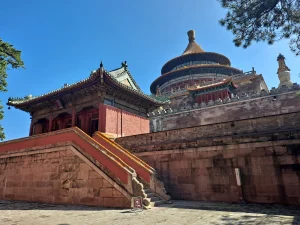
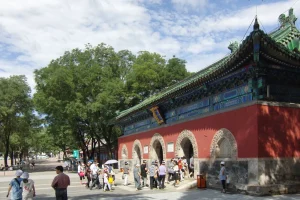
The real photographs in this guide show the terrace approach, carved stone, hall facade, and courtyard passage at Xumi Fushou Temple. They are not a substitute for a current access notice, and they should not be used to infer that every doorway or upper level is open to visitors today. Their purpose is to help you recognize architectural relationships before you arrive and to encourage closer observation once you are there.
Official references and current checks
For the wider heritage property, read the UNESCO World Heritage Centre description of the Mountain Resort and its Outlying Temples. The Hebei Provincial Cultural Relics Bureau introduction to national key cultural relics gives the temple’s Chengde location and heritage context. For research on Jixiang Faxi Hall, see the Chengde Cultural Relics Bureau exhibition notice. Before travel, check the 2026 preservation-project notice and current official visitor information for changes that affect access.
Pule Temple Chengde Guide: Xuguang Pavilion, Terrace Views and Visit Planning
Explore Pule Temple in Chengde through its circular Xuguang Pavilion, painted ceiling and hillside terraces, with a practical…
Puning Temple Chengde Guide: Big Buddha Temple, Guanyin Statue and Outer Temple Route
Plan Puning Temple in Chengde with Big Buddha Temple context, the giant wooden Guanyin statue, route timing, transport,…
Putuo Zongcheng Temple Chengde Guide: Little Potala Palace, Route and Visitor Tips
Plan Putuo Zongcheng Temple in Chengde with Little Potala Palace context, route timing, photo viewpoints, outer temple links,…
Chengde Puning Temple and Putuo Zongcheng Temple Guide
Plan a Chengde Outer Temples day with Puning Temple, Putuo Zongcheng Temple, Mountain Resort pairing, route timing, tickets,…
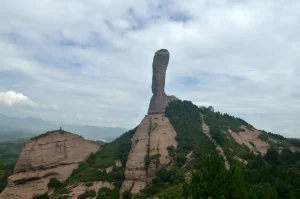
Qingchui Peak Chengde Guide: Hiking, Cable Car and Toad Rock
Plan a visit to Qingchui Peak in Chengde: see the rock pillar and Toad Rock, compare the walking…
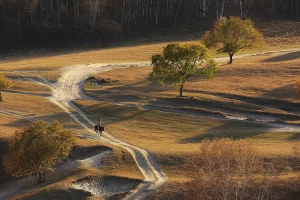
Mulan Paddock Weichang Guide: Grasslands, Yudaokou and Saihanba Route
Plan a thoughtful Mulan Paddock trip in Weichang: grassland and forest landscapes, Yudaokou and Saihanba route logic, seasonal…