
Puning Temple Chengde Guide: Big Buddha Temple, Guanyin Statue and Outer Temple Route
Puning Temple is one of the most meaningful temple visits in Chengde, especially if you want to understand the city beyond the Mountain Resort. It is often called the Big Buddha Temple because of the giant wooden Avalokitesvara, or Guanyin, figure inside the Mahayana Hall. But the site is more than one statue: it is part of Chengde’s outlying temple landscape, where Qing imperial power, Tibetan Buddhist symbolism, and practical religious life meet.
The Chinese name is 普宁寺, and you may see the English name written as Puning Temple, Puning Si, Temple of Universal Peace, or Big Buddha Temple. If you are coming from Beijing, first use the Beijing to Chengde high-speed train guide for station and timing decisions, then use this page to decide whether Puning Temple fits into a one-day Chengde plan or a slower two-day route.
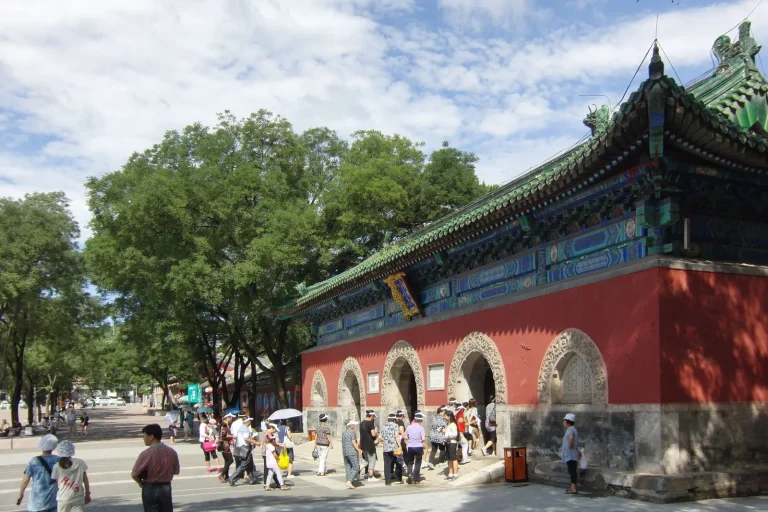
Why Puning Temple is worth a dedicated page
Many travelers only hear about Puning Temple as one half of a quick “Puning and Putuo Zongcheng” temple route. That comparison is useful, but it can hide the site’s own identity. Puning Temple was built in 1755 during the Qianlong reign and is closely connected with the Qing court’s frontier politics and Tibetan Buddhist patronage. The temple layout also changes as you move through it: the front section feels closer to a Han Chinese temple axis, while the rear area is more Tibetan-inspired.
UNESCO includes Chengde Mountain Resort and its Outlying Temples as a World Heritage property, and World Monuments Fund has highlighted Puning Temple’s continuing Buddhist monastic presence. For a visitor, the practical point is simple: this is not just a museum-like monument. It is a heritage site, an architectural route, and a religious place, so the visit should be slower and more respectful than a pure photo stop.
The giant Guanyin statue: what to know
The main reason many people come is the large wooden thousand-armed, thousand-eyed Avalokitesvara figure in the Mahayana Hall. It is commonly described as about 22.28 meters high and is one of the most famous wooden Buddhist images in China. Even if photography rules or indoor lighting limit what you can capture, the experience is still memorable because the scale of the hall and statue changes the feeling of the whole visit.
Do not rush straight to the statue and leave. The approach matters. Walk through the earlier courtyards first, notice the change in architecture, then enter the Mahayana Hall as the route’s climax. This makes the temple easier to understand than if you treat it as a single-object attraction.
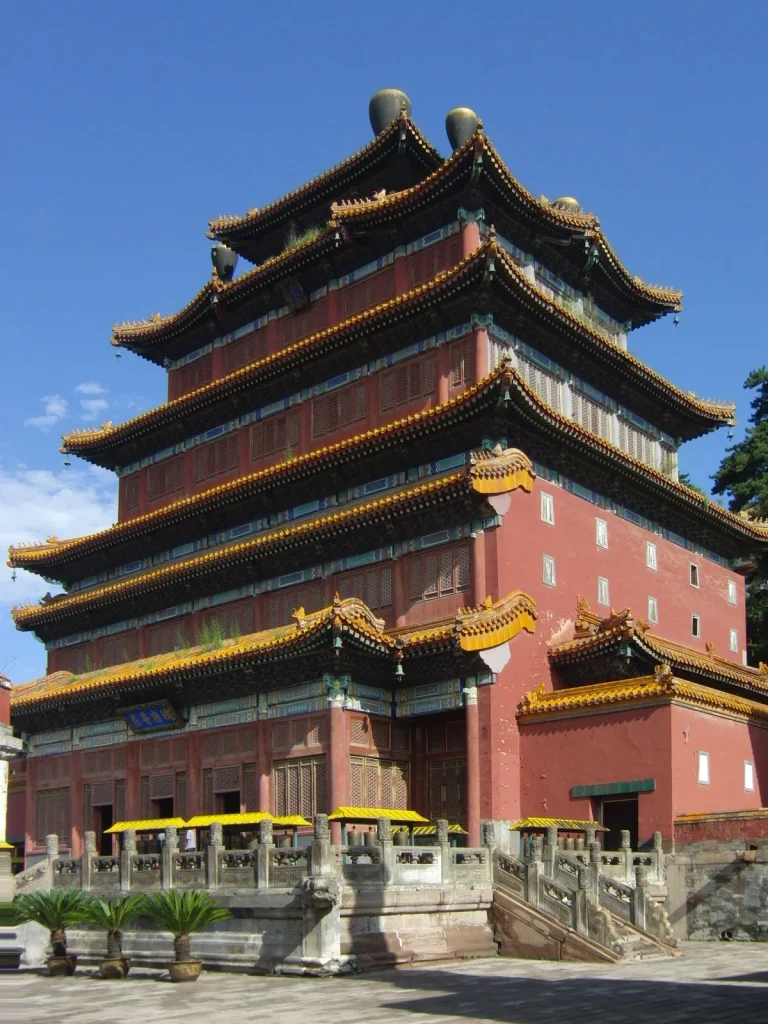
How much time to allow
Most visitors should allow about 90 minutes to two hours for Puning Temple. If you are deeply interested in Buddhist architecture, Qing history, or photography, leave more time. If you only have a short stop, focus on the main axis and Mahayana Hall, but remember that moving too quickly makes the site feel flatter than it really is.
- Fast visit: 60-75 minutes, suitable only if you are pairing several temples in one afternoon.
- Standard visit: 90-120 minutes, enough for the main route, courtyards, Mahayana Hall, and slow photos.
- Deeper visit: half a day when combined with nearby outer temples and a relaxed transfer plan.
How to combine Puning Temple with Putuo Zongcheng
Puning Temple and Putuo Zongcheng Temple are the two outer temples most foreign visitors are likely to compare. Putuo Zongcheng is stronger for hillside scale and the “Little Potala Palace” image. Puning Temple is stronger for active temple atmosphere, the Mahayana Hall, and the giant Guanyin statue. If you can visit both, read the Putuo Zongcheng Temple guide first, then decide which one should get your best energy and best light.
If you only have one temple slot, choose based on your interest. Pick Puning Temple for religious atmosphere and the big statue. Pick Putuo Zongcheng for dramatic exterior architecture and hillside views. The older Chengde Puning and Putuo Zongcheng comparison guide is useful if you want a quick side-by-side overview.
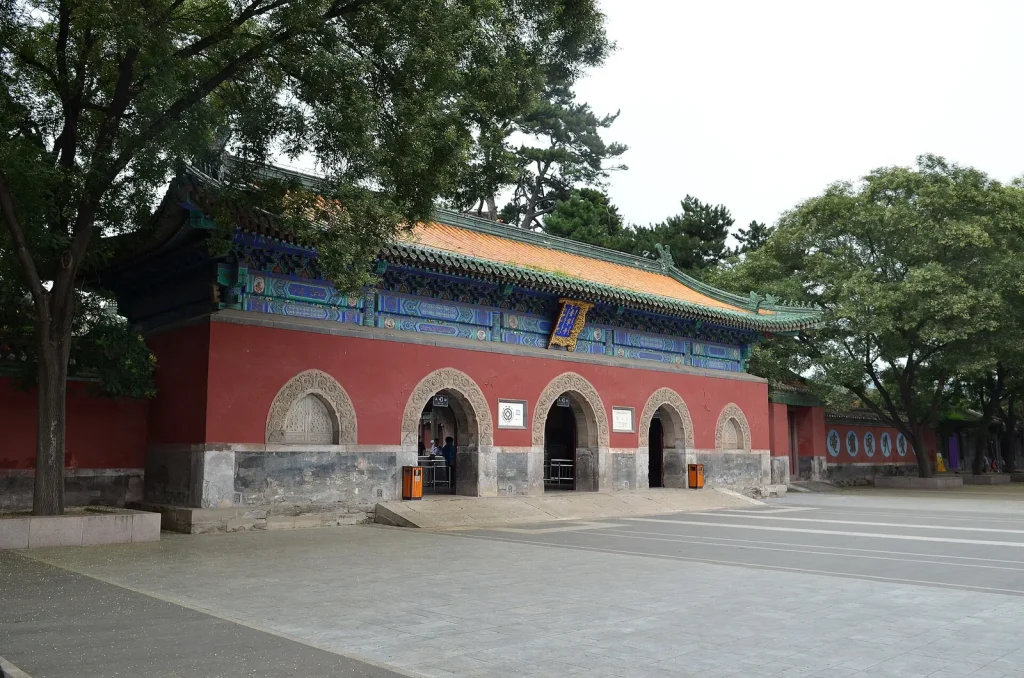
Where it fits in a Chengde itinerary
For a first Chengde trip, the Mountain Resort usually deserves the first major time block. Puning Temple is best added after you understand that Chengde was not only a summer palace, but also a meeting ground for imperial, Mongolian, Tibetan, and Manchu political culture. Pair this page with the Chengde Mountain Resort guide if you want the full context.
A rushed day trip from Beijing can technically include Chengde, but it often weakens the temple experience. A better pattern is to stay one night, visit Mountain Resort on day one, then use the second day for Puning Temple and Putuo Zongcheng before returning by train. The Beijing to Chengde two-day itinerary is the better planning frame for that route.
Transport and practical notes
Puning Temple is not inside the Mountain Resort, so build in transfer time. Taxis or ride-hailing are usually easier for foreign travelers than relying on old English bus notes. In Chinese map apps, search 普宁寺. If you are combining several outer temples, group nearby stops logically instead of crossing the city repeatedly.
Check current opening hours, ticketing, and any combined-ticket rules locally before setting a tight train plan. Temple sites can also feel different during holidays, prayer activity, or maintenance periods. Dress and behave respectfully because Puning Temple is not only an architectural attraction.
Visitor tips before you go
- Use 普宁寺 in Chinese map apps for navigation.
- Allow enough time for the route leading to the Mahayana Hall, not only the statue itself.
- Check indoor photography rules and follow staff instructions.
- Pair Puning Temple with Putuo Zongcheng or Mountain Resort for a stronger Chengde story.
- Visit earlier in the day if you want calmer courtyards and more comfortable pacing.
References and image sources
For non-commercial context, useful references include the UNESCO page for the Mountain Resort and its Outlying Temples and World Monuments Fund’s Puning Temple Statues project page. Page images use Wikimedia Commons files including Puning Temple entrance, Puning Temple Hall of Mahayana, and Puning Temple 20120804.
Pule Temple Chengde Guide: Xuguang Pavilion, Terrace Views and Visit Planning
Explore Pule Temple in Chengde through its circular Xuguang Pavilion, painted ceiling and hillside terraces, with a practical…
Xumi Fushou Temple Chengde Guide: Great Red Terrace, Panchen Lama History and Respectful Visits
Plan a thoughtful Xumi Fushou Temple visit in Chengde: Great Red Terrace architecture, historical context, nearby Outer Temples,…
Putuo Zongcheng Temple Chengde Guide: Little Potala Palace, Route and Visitor Tips
Plan Putuo Zongcheng Temple in Chengde with Little Potala Palace context, route timing, photo viewpoints, outer temple links,…
Chengde Puning Temple and Putuo Zongcheng Temple Guide
Plan a Chengde Outer Temples day with Puning Temple, Putuo Zongcheng Temple, Mountain Resort pairing, route timing, tickets,…
Qingchui Peak Chengde Guide: Hiking, Cable Car and Toad Rock
Plan a visit to Qingchui Peak in Chengde: see the rock pillar and Toad Rock, compare the walking…
Mulan Paddock Weichang Guide: Grasslands, Yudaokou and Saihanba Route
Plan a thoughtful Mulan Paddock trip in Weichang: grassland and forest landscapes, Yudaokou and Saihanba route logic, seasonal…