
Putuo Zongcheng Temple Chengde Guide: Little Potala Palace, Route and Visitor Tips
Putuo Zongcheng Temple is one of the most recognizable sights in Chengde, especially for travelers searching for the city’s “Little Potala Palace.” The nickname is useful, but it can also be misleading if you expect a Tibet trip compressed into one building. The temple belongs to the wider Qing imperial landscape around Chengde Mountain Resort, where architecture, diplomacy, religion, and frontier politics were expressed through a group of outlying temples.
The Chinese name is 普陀宗乘之庙. In English you may see Putuo Zongcheng Temple, Putuo Zongcheng Monastery, Temple of Universal Peace, or Little Potala Palace. If you are planning from Beijing, first use the Beijing to Chengde high-speed train guide for transport logic, then decide whether Putuo Zongcheng Temple belongs in a one-day Chengde route or a more comfortable two-day stay.
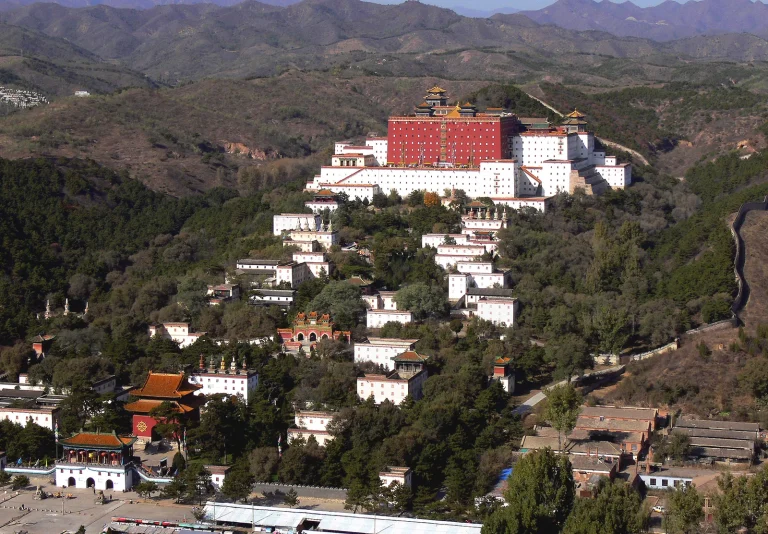
Why Putuo Zongcheng Temple matters
Putuo Zongcheng Temple was built during the Qing dynasty as part of Chengde’s imperial religious and political landscape. It is often compared with the Potala Palace because of its red-and-white hillside massing, terraces, and Tibetan Buddhist visual language. The point is not that it copies Tibet mechanically. The more useful way to read it is as a Qing court statement: a place where imperial authority, Tibetan Buddhist patronage, and the symbolic geography of empire met near the summer residence.
UNESCO lists the Mountain Resort and its Outlying Temples as a World Heritage property, and Putuo Zongcheng is part of that wider context. For travelers, this means the temple should not be treated as a random photo stop outside town. It works best when linked with the Chengde Mountain Resort guide and the broader story of why emperors spent time in Chengde.
How much time to allow
Most visitors should allow about 90 minutes to two hours for Putuo Zongcheng Temple. A faster visit is possible if you only want the exterior and a few photographs, but it weakens the experience. The site is built on a slope, and its visual rhythm comes from approaching gradually: lower courtyards, rising terraces, red walls, rooflines, and views back across the temple compound.
- Fast visit: focus on the main exterior views and the most obvious photo angles.
- Standard visit: walk through the courtyards, climb gradually, and pause at the higher terrace areas.
- Deeper visit: combine the temple with Puning Temple or Mountain Resort and read the sites as a connected Chengde route.
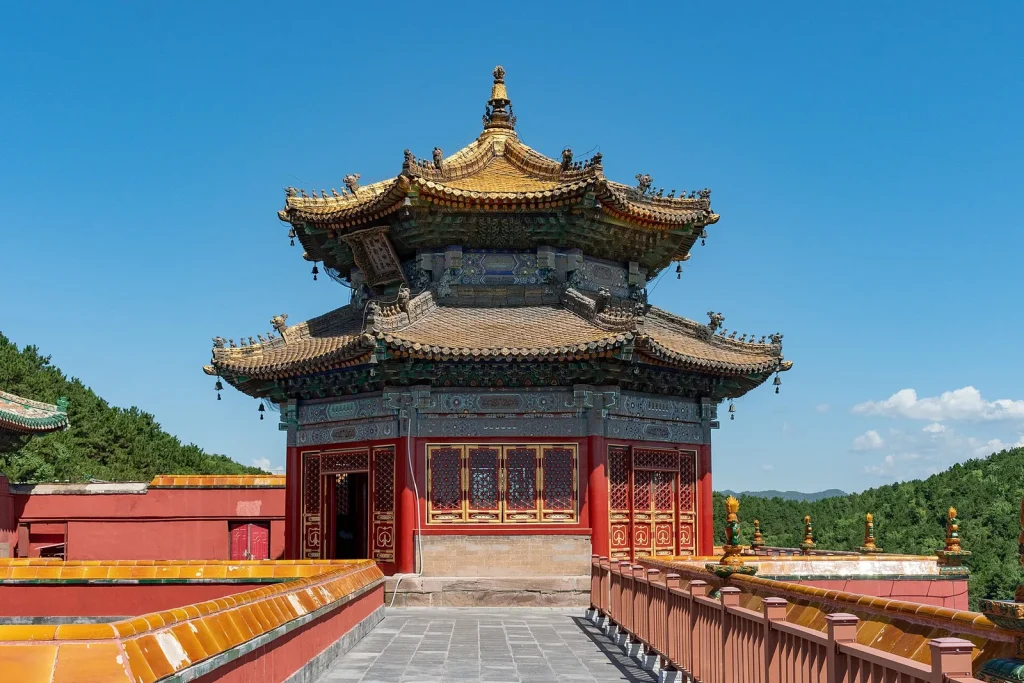
What to look for inside the temple
The most memorable element is the relationship between scale and slope. From a distance, the temple looks like a dramatic block of red and white architecture set against the hills. Inside, the experience becomes more layered: gates, terraces, courtyards, roof details, and changes in viewpoint. Take time to turn around as you climb; some of the best views are not directly in front of you.
- Red palace-like facade: the reason many travelers connect the temple with the Potala image.
- Terraced route: useful for understanding the hillside design and for spacing your photos.
- Roof and color details: gold, red, white, and painted woodwork give the site its visual identity.
- Long views: weather permitting, look back across the temple complex and surrounding Chengde landscape.
Best time to visit
Morning is often the easiest time if you want a calmer visit and softer light. Summer can be hot, especially when climbing between terraces, so carry water and avoid rushing. Autumn is a strong season for Chengde generally because the air can be clearer and the hills feel more comfortable. Winter is quieter, but cold wind and possible snow or ice can affect walking conditions.
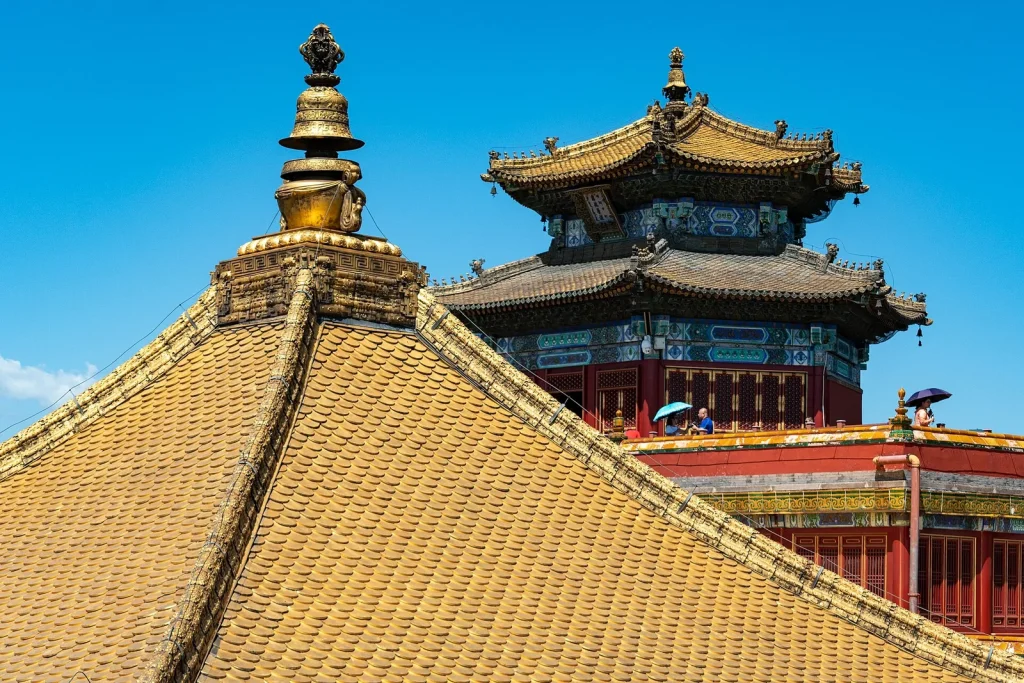
How to combine it with other Chengde sights
If you only have one full day in Chengde, put the Mountain Resort first, then choose one or two outlying temples based on energy and transport. Putuo Zongcheng Temple pairs naturally with Puning Temple because both help explain why Chengde is more than a palace town. The existing Chengde Puning Temple and Putuo Zongcheng Temple guide is useful if you want a quick comparison between the two.
For most travelers, a two-day route is stronger than a rushed one-day checklist. Day one can focus on Chengde Mountain Resort and nearby city logistics. Day two can cover Putuo Zongcheng Temple, Puning Temple, and another selected outer-temple stop if transport and opening hours work. Use the Beijing to Chengde two-day itinerary if you want to keep train timing realistic.
Transport and practical route notes
Putuo Zongcheng Temple is outside the core Mountain Resort area, so do not assume you can walk casually between all major Chengde sights. Taxis or ride-hailing are usually the simplest option for foreign visitors, especially when combining several temples. If you use Chinese map apps, search with 普陀宗乘之庙. Check current opening hours, ticketing, and any combined-ticket rules locally before departure, because scenic-area arrangements can change by season or holiday period.
Comfortable shoes matter. The temple is not a long hike, but the route includes slopes, steps, and open terraces. If you are traveling with older relatives or children, keep the pace slower and do not stack too many temples into the same afternoon.
Visitor tips before you go
- Use 普陀宗乘之庙 in map apps for more reliable navigation.
- Do not treat “Little Potala Palace” as the whole story; connect it with Chengde’s Qing imperial context.
- Start earlier in hot months because the terrace route can feel exposed.
- Pair it with Mountain Resort or Puning Temple instead of visiting it as an isolated photo stop.
- Check current ticketing and opening details locally before making a tight train plan.
References and image sources
For non-commercial context, useful references include the UNESCO page for the Mountain Resort and its Outlying Temples and China Culture’s overview of the Chengde Mountain Resort and Outlying Temples. Page images use Wikimedia Commons files including Putuo Zongcheng Temple, Putuo Zongcheng Temple 22382-Chengde, and Putuo Zongcheng Temple 22422-Chengde.
Pule Temple Chengde Guide: Xuguang Pavilion, Terrace Views and Visit Planning
Explore Pule Temple in Chengde through its circular Xuguang Pavilion, painted ceiling and hillside terraces, with a practical…
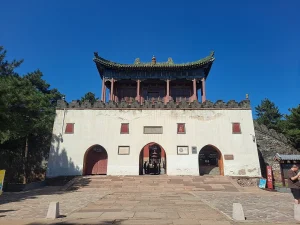
Xumi Fushou Temple Chengde Guide: Great Red Terrace, Panchen Lama History and Respectful Visits
Plan a thoughtful Xumi Fushou Temple visit in Chengde: Great Red Terrace architecture, historical context, nearby Outer Temples,…
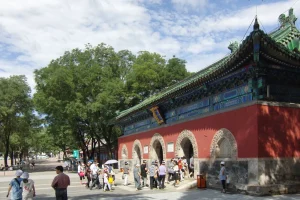
Puning Temple Chengde Guide: Big Buddha Temple, Guanyin Statue and Outer Temple Route
Plan Puning Temple in Chengde with Big Buddha Temple context, the giant wooden Guanyin statue, route timing, transport,…
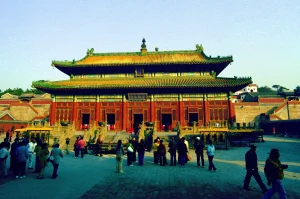
Chengde Puning Temple and Putuo Zongcheng Temple Guide
Plan a Chengde Outer Temples day with Puning Temple, Putuo Zongcheng Temple, Mountain Resort pairing, route timing, tickets,…
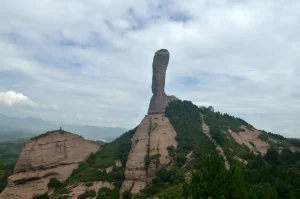
Qingchui Peak Chengde Guide: Hiking, Cable Car and Toad Rock
Plan a visit to Qingchui Peak in Chengde: see the rock pillar and Toad Rock, compare the walking…
Mulan Paddock Weichang Guide: Grasslands, Yudaokou and Saihanba Route
Plan a thoughtful Mulan Paddock trip in Weichang: grassland and forest landscapes, Yudaokou and Saihanba route logic, seasonal…