
Dingzhou Examination Hall Guide: Kuige and Qing Exam History
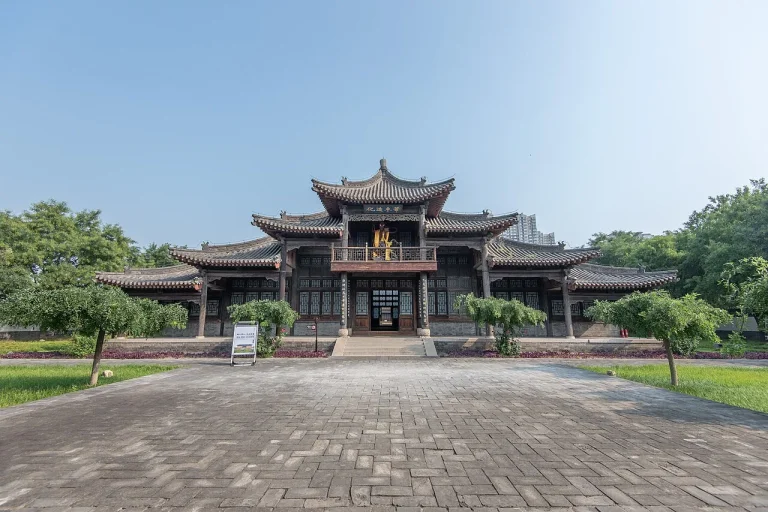
At Dingzhou Examination Hall, the most striking view is a broad timber facade with roofs stepping down from a central pavilion. Behind it lies the story of students, examination papers and officials who once gathered here. Known in Chinese as 定州贡院 (Dingzhou Gongyuan), the complex adds a different subject to a Dingzhou day: education and ambition in Qing China.
Come for the architecture, then use the courtyards and interpretation to understand how the place worked. A focused visit takes roughly 60-90 minutes; allow longer if the exhibition is open and you want to read it carefully. Those are planning estimates. The hall fits particularly well with the nearby old-city sights covered in our Dingzhou day-trip route.
What was Dingzhou Gongyuan used for?
Hebei’s cultural heritage authority dates the complex’s foundation to 1738, during the Qianlong reign, and its repair and expansion to 1834. Beijing’s official tourism information identifies it as a place where local candidates sought student and tribute-student qualifications within the examination system. It helps to keep that local role in mind: the term gongyuan can describe different examination settings, and this was not the emperor’s final palace examination in Beijing.
The surviving layout combines an entrance, the Kuige-Haoshe building, further halls and a rear building. The site also has a martial-examination history. Reading those functions together explains why the visit includes both exam spaces and references to physical trials. You are looking at one local institution within a much larger system of selection, rather than a complete model of every Chinese examination venue.
Three things to look for on the courtyard route
1. The stepped roofs of Kuige and Haoshe
Pause far enough back to see the whole front elevation. The Kuige (魁阁) is attached to the south of the Haoshe (号舍), the examination space. Their joined outline, with a high centre and lower roofs on either side, is the defining view of the complex. The upper pavilion housed the figure of Kuixing, associated with literary success.
Look beyond the central roof to the long windows beneath the upper eaves. The provincial heritage description explains their role in bringing light into the hall. From the courtyard you can appreciate the overall composition; closer up, concentrate on the timber joints, eaves and changes in roof height. Stay on the marked visitor route so that a photograph does not come at the expense of the building.
2. The scale of the examination spaces
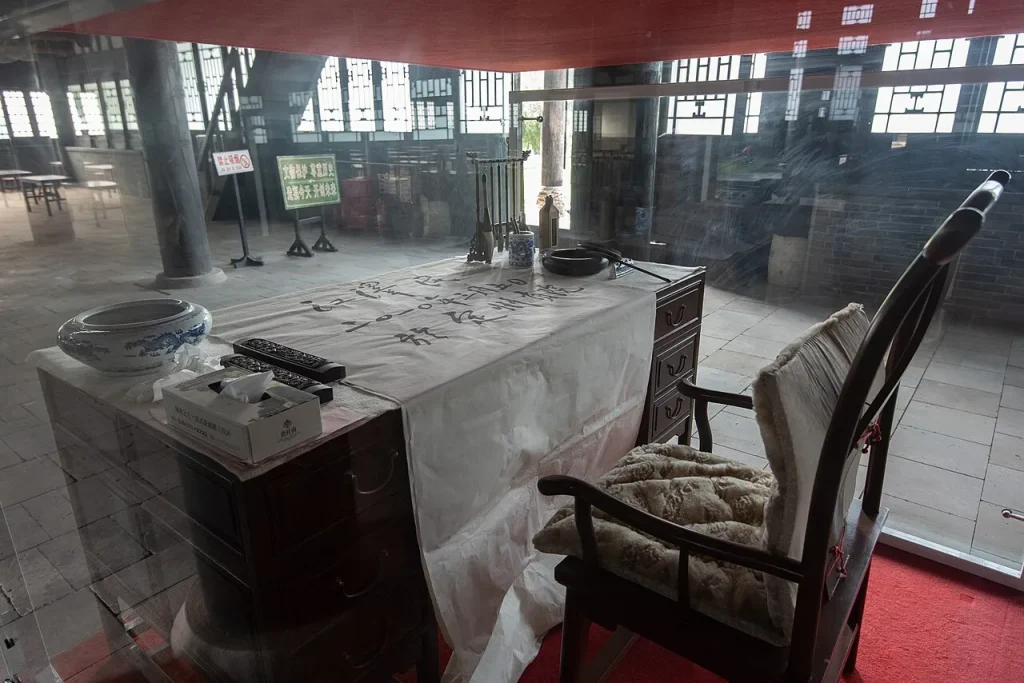
Inside, compare the building’s structure with the way examination life is presented. A desk, chair or writing set can help a visitor imagine the work, but a historical-looking display does not establish that the furniture survives from a Qing examination. Use the labels to distinguish old fabric, restored features and exhibition props. The photograph below records a display as it appeared in September 2020.
If the written explanations are mainly in Chinese, save a few useful terms before visiting: 科举 means the imperial examination system, 号舍 identifies examination accommodation or spaces, and 考官 means an examiner. A translation app can help with a label, but leave space for others and follow any restrictions on photographing interiors.
3. The halls beyond the main facade
Continue along the axis rather than turning around after the best-known photo. According to the provincial heritage account, the hall north of the examination building was used for handing in and sealing papers. The rear building was associated with officials watching martial candidates and also provided accommodation. The sequence makes the administrative side of the institution easier to understand.
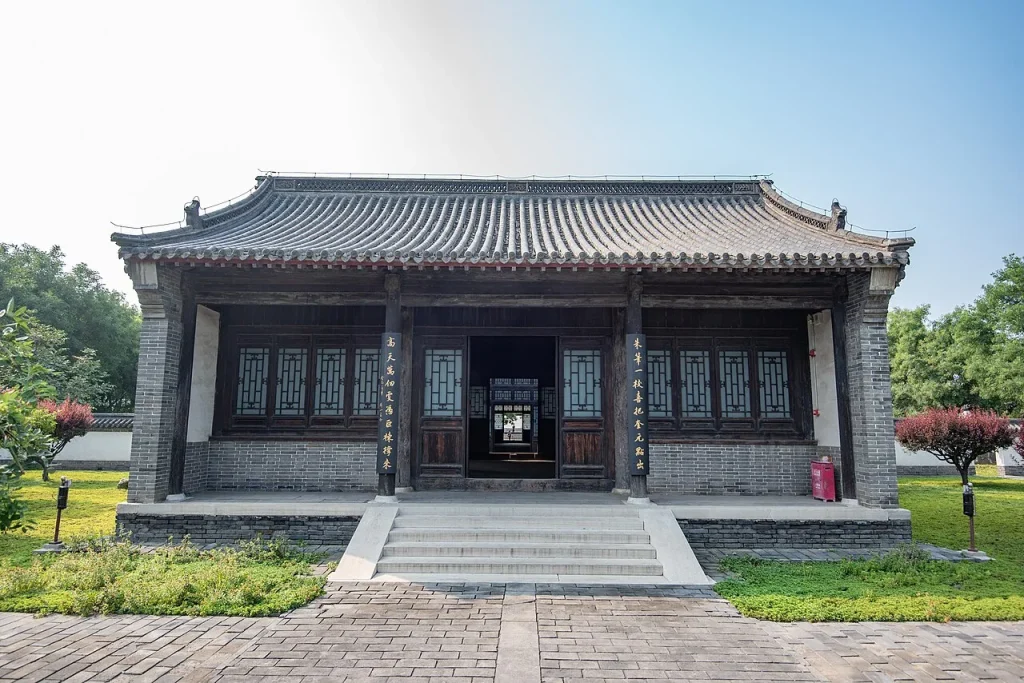
The quieter facades are worth a close look: raised entrances, latticework and grey brick create a different visual rhythm from the elaborate Kuige. Do not assume a rear building or upper floor is accessible because an older visitor account describes a view from it. Check the current signs and ask staff before entering a stairway or side room.
Exhibitions and performances
An official report published on the Xiong’an government website in September 2024 described a newly opened examination-culture exhibition on the western side, along with staged examination scenes at weekends. That is evidence of the site’s interpretation program at that time. It does not confirm the performance schedule or exhibition arrangements for your visit.
If a demonstration matters to you, ask about the day’s program before buying a ticket or arranging a late train. A performance can add context, but the building remains the main reason to come. Allow enough quiet time to see it independently of a group activity. English-language interpretation should be checked in advance rather than assumed.
Tickets and current visitor checks
Information checked 27 October 2026: Dingzhou’s municipal government published a ticket adjustment effective from 1 September 2024, setting Gongyuan admission at RMB 50 per person per visit. Treat this as a dated official price reference. Confirm the current price, any combined ticket, concessions and exhibition inclusions with the scenic area before paying. Older directories quoting RMB 20 predate that policy.
We could not independently confirm a same-day official opening window or last-admission time. Plan a daylight visit and check the scenic area’s current notice before departure, especially in winter or around holidays. Also confirm whether real-name booking is needed and which identity document is accepted. Bring your passport for identification; it does not by itself guarantee eligibility for a particular discount.
There are outdoor courtyards as well as covered spaces. In hot weather, leave time for shade and water; in colder months, account for wind and earlier darkness. The historic thresholds and steps visible in the photographs matter for visitors with limited mobility. Ask staff about an accessible route before committing to the full circuit.
Getting there and combining it with Dingzhou’s old city
Save 定州贡院 in a map app and use the current visitor-entrance pin near Caochang Hutong (草场胡同). Historic directories give slightly different street numbers, so the attraction name and entrance location are more useful than relying on a translated address alone.
If arriving by rail, distinguish Dingzhou East (定州东站) from Dingzhou station (定州站). You still need a local transfer to the heritage area. Our Beijing to Dingzhou train guide covers the station choice and how to leave a realistic return buffer. Check the actual service for your date rather than choosing a train solely because it has the shortest listed journey.
For a half day, make the examination hall your first indoor-and-courtyard stop, take a meal break, then continue to Kaiyuan Temple’s Liaodi Pagoda. The two sites offer distinct architectural subjects. Ask separately about pagoda entry and climbing access; a ticket to one attraction does not automatically include the other.
With a fuller day, add the Confucian Temple or Dingzhou Museum as current opening arrangements allow. Education at the temple, examinations at Gongyuan and the pagoda’s religious architecture give the route a coherent theme without making every stop feel the same. Keep the final choice flexible: visiting two sites carefully is more rewarding than reaching several doors just as they close.
Sources and photo dates
The three photographs are real images by Siyuwj, taken on 7 September 2020, selected to show different parts of the complex. They have been resized and converted to WebP under CC BY-SA 4.0. Their captions link to the original files; restoration work, displays and access may have changed since they were taken.
- Hebei Provincial Cultural Heritage Administration: foundation, expansion, architectural layout and historic functions.
- Beijing’s official tourism information: local examination context and the courtyard sequence. Older ticket and hours listings are not used as current promises.
- Dingzhou Municipal Government ticket notice: the price policy effective from September 2024.
- Xiong’an government website report: the exhibition and interpretation program reported in September 2024.
Dingzhou Day Trip from Shijiazhuang or Baoding: Ancient Tower, Confucian Temple and Old City
Plan a Dingzhou day trip from Shijiazhuang or Baoding with Kaiyuan Temple Pagoda, Confucian Temple, Examination Hall, route…
Dingzhou Kaiyuan Temple Pagoda Guide: Liaodi Pagoda, Old City and Train Tips
Plan Dingzhou Kaiyuan Temple Pagoda with Liaodi Pagoda history, old-city route ideas, photo priorities, Beijing train logic, timing,…
Beijing to Dingzhou High-Speed Train Guide: Pagoda, Exam Hall and Old City Tips
Use this Beijing to Dingzhou high-speed train guide to plan Dingzhou East Station arrivals, old-city transfers, Kaiyuan Temple…
Cangzhou Museum Guide: Grand Canal, Acrobatics and Local History
Explore Cangzhou Museum through its city-history, Grand Canal and Wuqiao acrobatics galleries, with exhibit highlights, booking checks and…
Shengfang Ancient Town Guide: Bazhou Water-Town Walks, Wenchang Pavilion and Folk Culture
Plan Shengfang Ancient Town in Bazhou with water-town context, Wenchang Pavilion and old-street walking ideas, museum stops, and…
Nuanquan Ancient Town and Dashuhua Guide: Yuxian Fortress Walks and Fire-Flower Shows
Plan Nuanquan Ancient Town in Yuxian with Xigubao walking context, Dashuhua fire-flower show checks, respectful viewing advice, and…