
Beijing to Xiong’an New Area Travel Guide: Baiyangdian, Trains and Day Trip Tips
Xiong’an New Area is one of the most talked-about places in Hebei, but it is not the same kind of trip as Chengde, Shanhaiguan, Zhengding or Beidaihe. It is a new urban-development area south of Beijing, and for travelers the most useful way to think about it is simple: combine the Xiong’an story with Baiyangdian wetlands, keep the transport plan flexible, and do not expect a fully mature old-city sightseeing circuit.
This guide is written for foreign visitors who are already in Beijing, Baoding or central Hebei and are trying to decide whether Xiong’an deserves a day. If you want classic temples, museums and historic streets, start with Baoding or Baoding city attractions. If you want wetlands, boat scenery and a look at a high-profile new area in the Beijing-Tianjin-Hebei region, Xiong’an and Baiyangdian can make sense.
Where Xiong’an Fits in a Hebei Trip
Xiong’an New Area sits in central Hebei, broadly between Beijing, Tianjin and Shijiazhuang. Administratively it was established to support coordinated development around the capital region, and that background matters because the area is still evolving. For a traveler, the practical question is not “How many famous sights are there?” but “Can I combine the new-area context with Baiyangdian and make the transport work without wasting the day?”
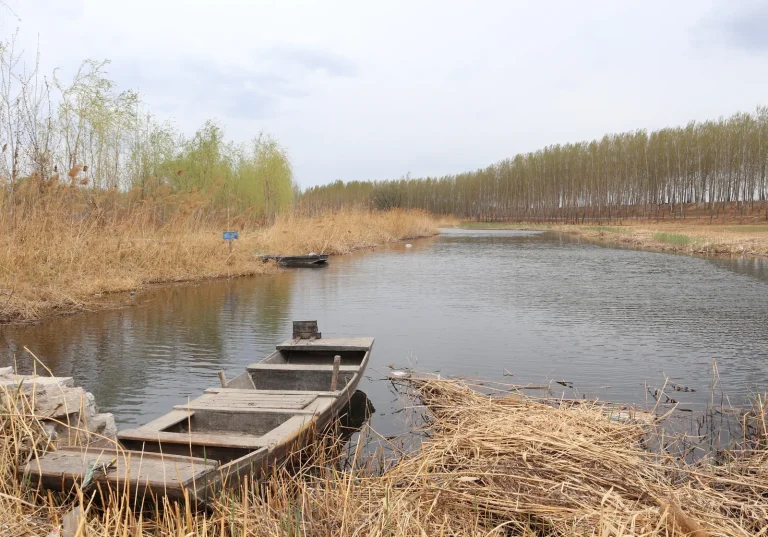
That is why this article should be read alongside the more nature-focused Baiyangdian Lake day trip guide. Baiyangdian is the strongest visitor anchor: wetlands, reed scenery, boat routes, lotus-season atmosphere and a slower rural-water landscape that feels very different from Beijing. Xiong’an adds the modern planning context, railway-station choices and a reason to understand why this part of Hebei appears so often in Chinese news.
Is Xiong’an Worth Visiting from Beijing?
It can be worth visiting, but only for the right traveler. Xiong’an is best for people interested in new-city development, Beijing-area regional planning, wetlands, transport links and a less standard Hebei route. It is not yet the best choice for a first-time visitor who only has one free day and wants famous landmarks, old streets, big museums or easy English-language tourism services.
- Best fit: repeat visitors to Beijing, photographers who want wetland scenery, urban-planning observers, and travelers already going toward Baoding or Baiyangdian.
- Weaker fit: first-time China visitors who want a simple landmark day trip, families who need very predictable tourism services, or anyone who dislikes checking transport details in advance.
- Best season: late spring to early autumn for greener wetland scenery, with summer lotus views depending on local conditions. Winter is quieter but less visually rich.
How to Get from Beijing to Xiong’an
Do not build the whole plan around a remembered train time. For a current trip, check the 12306 China Railway site or the official app on the exact travel date, using Beijing departure stations and Baiyangdian, Xiong’an or nearby stations as search points. Train schedules, station choices and local transfer options can change, especially around holidays, construction phases and seasonal travel peaks.
For most independent travelers, rail is easier than trying to arrange a long private car from Beijing. The main planning issue is the last step after arrival: whether your day is aimed at Baiyangdian scenic/wetland areas, a Xiong’an urban-development stop, or a mix of both. If your main goal is Baiyangdian, start with the pier or scenic-area access details. If your main goal is Xiong’an context, check whether your hotel, host, event or local contact has a recommended arrival station.

A Realistic One-Day Route
A good Xiong’an day from Beijing should be conservative. The mistake is to treat it like a mature tourist city where every stop connects neatly. A more realistic plan is to choose one main purpose and one backup stop.
| Plan type | Best for | How to structure the day |
|---|---|---|
| Baiyangdian-first | Nature, photos, lotus season, boat scenery | Morning train, transfer to Baiyangdian access area, wetland/boat time, early return buffer |
| Xiong’an context-first | Urban planning, new-area observation, regional development interest | Confirm station and local access first, keep sightseeing light, add Baiyangdian only if timing is comfortable |
| Baoding plus Xiong’an | Travelers already overnighting in Baoding | Use Baoding as the base, visit Baiyangdian or Xiong’an as a side trip instead of rushing from Beijing |
If you are choosing between this route and a more traditional Hebei day, compare it with Beijing to Baoding. Baoding gives you old institutions, food and a clearer city route. Xiong’an gives you a newer story and stronger wetland pairing, but it requires more checking before departure.
What to See Around Xiong’an and Baiyangdian
Baiyangdian wetlands are the most travel-friendly part of the route. Expect water channels, reeds, lotus scenery in season, small boats and local wetland landscapes. The experience depends heavily on season, weather, water conditions and the access point you use, so do not judge the area only from one old photo or one short social-media clip.
Xiong’an urban areas are better understood as context rather than as a checklist of famous sights. Some visitors are interested in seeing the scale of development, station areas, business districts and the way a new Chinese urban area is taking shape. For ordinary sightseeing, keep expectations practical: check what is open, avoid assuming every landmark is visitor-ready, and do not wander into construction or office areas without a clear reason.
Baoding city remains the safer base if you want museums, food and an easier overnight plan. A practical foreign-visitor route can be Beijing to Baoding, Baoding city sights and food, then Baiyangdian or Xiong’an as a second-day side trip. That gives more breathing room than compressing everything into one day from Beijing.
Tickets, Boats and On-the-Ground Checks
For Baiyangdian, always check current scenic-area rules before you go. Boat arrangements, pier choices, ticketing, opening hours and seasonal access are the parts most likely to change. If you are traveling with older visitors, children or luggage, avoid a plan that depends on a late final transfer. Wetland areas are more enjoyable when the day is not rushed.
For Xiong’an itself, use official local information and current map data rather than copying a fixed itinerary from an old article. The Xiong’an official English site is the safest starting point for official context, while train availability should be checked directly through railway channels. If you are attending a meeting, hotel stay or business visit, ask the host for the exact station and transfer recommendation.
Should You Stay Overnight?
Most leisure travelers can treat Xiong’an and Baiyangdian as a day or side trip rather than a standalone multi-night destination. Staying overnight makes sense if you want a slower Baiyangdian morning, you have a work reason in Xiong’an, or you are combining central Hebei with Baoding. If your goal is a comfortable leisure weekend, Baoding may still be the more predictable base because it has clearer city services, food routes and classic sightseeing.
Hotel choice should follow your first morning plan. If you want wetland access, stay near the Baiyangdian side or in a place that can clearly explain pier transfers. If you want rail convenience, stay near the station you will actually use. If you want broader city options, look at Baoding and treat Xiong’an as a side route.
How Xiong’an Connects with Other Hebei Routes
Xiong’an works best when it is not isolated. Pair it with Baiyangdian Lake, Baoding, or the wider Beijing to Hebei train planning guide. If you are comparing Hebei by theme, it belongs in the “wetlands and modern regional planning” bucket rather than the “ancient city” or “Great Wall” bucket.
That distinction helps with SEO and with real travel planning. A visitor searching for “Beijing to Xiong’an” likely needs current transport judgment and a reason to go. A visitor searching for “Baiyangdian” likely wants wetland scenery, boats and seasons. A visitor searching for “Baoding day trip” likely wants city culture and food. The strongest itinerary is the one that connects those intents without pretending they are the same trip.
Practical Tips Before You Go
- Check train stations by exact name before buying tickets; do not assume every nearby station serves your intended transfer well.
- Keep a return buffer, especially if your plan includes boats, local taxis or seasonal scenic-area access.
- Bring passport details for rail checks and hotel registration if staying overnight.
- Use current maps in Chinese as well as English where possible; English map names can lag behind local development.
- Avoid construction zones, office campuses and restricted areas unless you have a clear visitor purpose.
- If the weather is hot, prioritize morning wetland time and avoid a heavy midday walking plan.
Bottom Line
Xiong’an New Area is not a replacement for Hebei’s classic destinations. It is a different kind of stop: part new-city story, part transport-planning exercise, and part Baiyangdian wetland route. For foreign visitors, the best version is not to rush in just to say you have been there. Plan it around a clear purpose, verify the train and local access, and let Baiyangdian provide the scenic heart of the trip.
References and Current Checks
- Xiong’an official English site for official new-area information and current local context.
- 12306 China Railway for current train searches and ticket checks.
- Image references: Wikimedia Commons boat photo; Wikimedia Commons station photo.

Dingzhou Kaiyuan Temple Pagoda Guide: Liaodi Pagoda, Old City and Train Tips
Plan Dingzhou Kaiyuan Temple Pagoda with Liaodi Pagoda history, old-city route ideas, photo priorities, Beijing train logic, timing,…
Guangfu Ancient City Guide in Handan: Water Town Walls, Tai Chi Roots and Beijing Train Tips
Plan Guangfu Ancient City in Handan with old walls, water-town scenery, Tai Chi heritage, Beijing train links, timing,…

Tangshan Nanhu Park Guide: Lake Walks, Urban Renewal and Beijing Train Tips
Plan Tangshan Nanhu Park with lake walks, urban renewal context, Beijing train links, best timing, city pairings, hotels,…
Dajingmen Great Wall Guide in Zhangjiakou: Gate, Trade Route and Beijing Train Tips
Plan Dajingmen in Zhangjiakou with Great Wall history, Zhangku trade route context, Beijing train links, walking tips, seasons,…
Beijing to Zhangjiakou High-Speed Train Guide: Stations, Chongli and Dajingmen Tips
Plan a Beijing to Zhangjiakou high-speed train trip with station choices, Zhangjiakou Station, Taizicheng, Chongli, Dajingmen and realistic…
Beijing to Xingtai High-Speed Train Guide: East Station, Old City and Taihang Mountain Tips
Use this Beijing to Xingtai high-speed train guide to plan Xingtai East Station arrivals, city-center transfers, old-city stops,…