
Daci Pavilion Baoding Guide: Old City Landmark, Respectful Visits and Walking Route
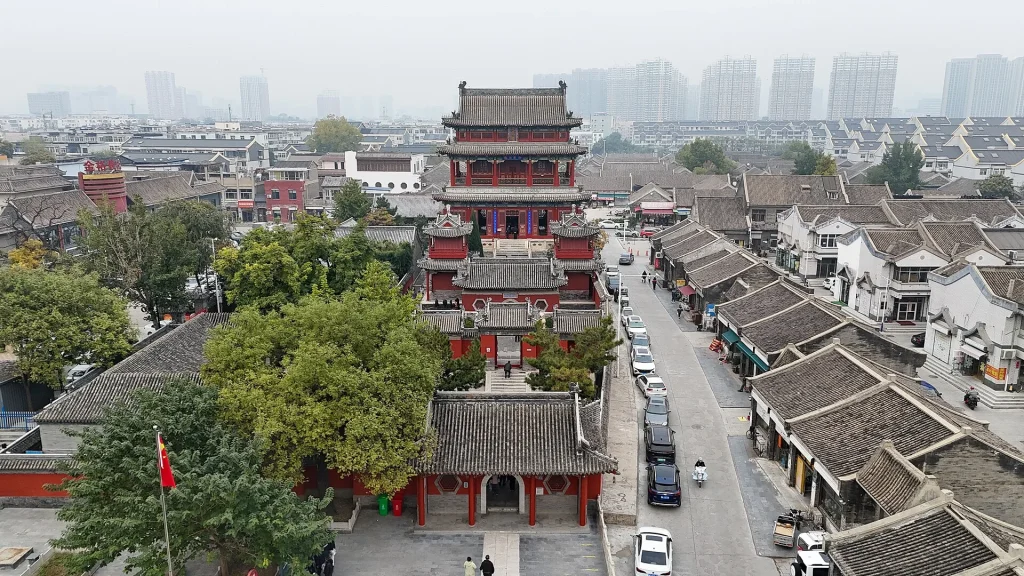
Daci Pavilion is one of the clearest visual landmarks in Baoding’s old city: a traditional red-and-green building complex rising above the surrounding streets. It is a good short cultural stop for travelers who want to understand the historic center beyond a food walk or a fast photo. The value is in its urban setting, architecture, and role in a wider cluster of Baoding heritage sites.
For first-time visitors, Daci Pavilion works best as part of a walking plan, not as an all-day destination. Give yourself time to look at the exterior, architectural layers, and surrounding streets, then connect it with one or two nearby heritage stops at a comfortable pace. Because it is also a place of religious and cultural importance, dress and behave respectfully, keep voices low, and follow any current signage about photography or access.
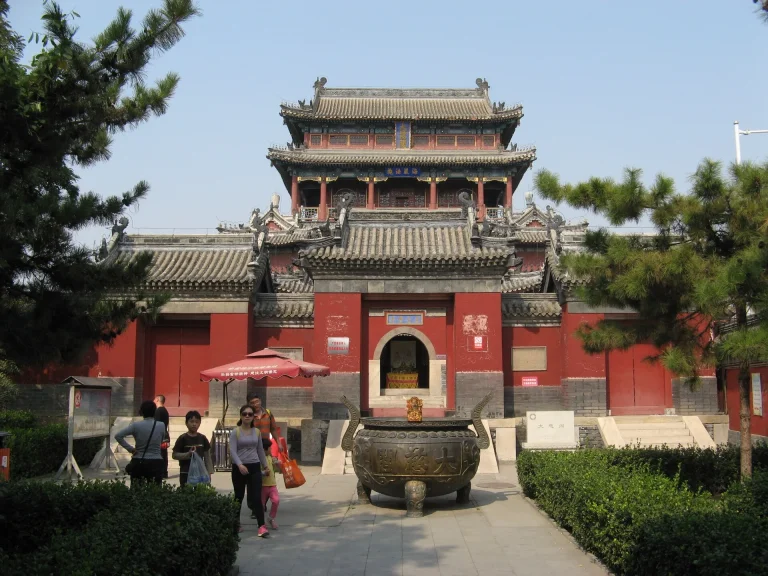
Why Daci Pavilion matters in Baoding
Daci Pavilion is not simply an isolated temple building. The Hebei Provincial Cultural Heritage Bureau lists it as a national key cultural relic site in Baoding, with its surviving historic fabric identified in the Qing category. It is also part of the city’s present cultural-heritage management network alongside Ming Shuang Lou and other museums and historic institutions.
That context helps explain why the site belongs on an old-city route. Baoding’s history is read through different kinds of places: a former provincial administration compound, a classical garden and academy landscape, religious architecture, streets, food traditions, and local museums. Daci Pavilion gives the route a vertical landmark and a quieter architectural pause between larger museum visits.

How to build a practical old-city walk
Start with one anchor attraction
Use the Zhili Governor’s Office guide if official administration history is your priority, or the Ancient Lotus Pond guide if you prefer a garden-and-literary setting. Add Daci Pavilion as the focused architectural stop between them, rather than trying to crowd a long list of museums into a few rushed hours.
Leave room for street-level observation
The best part of this area is often the transition between sites: lanes, shopfronts, street trees, and the way a large historic roofline appears above the city. Walk without assuming that every building is a visitor attraction. Use pedestrian crossings, respect residences and religious spaces, and do not climb steps or barriers that are not clearly open to visitors.
End with a local meal, not another rushed monument
A Baoding old-city route can naturally finish with food. The Baoding food guide explains common dishes such as donkey burger and local snacks, while the Beijing to Baoding day-trip guide helps you decide whether the city deserves an overnight stay rather than a tightly timed return.
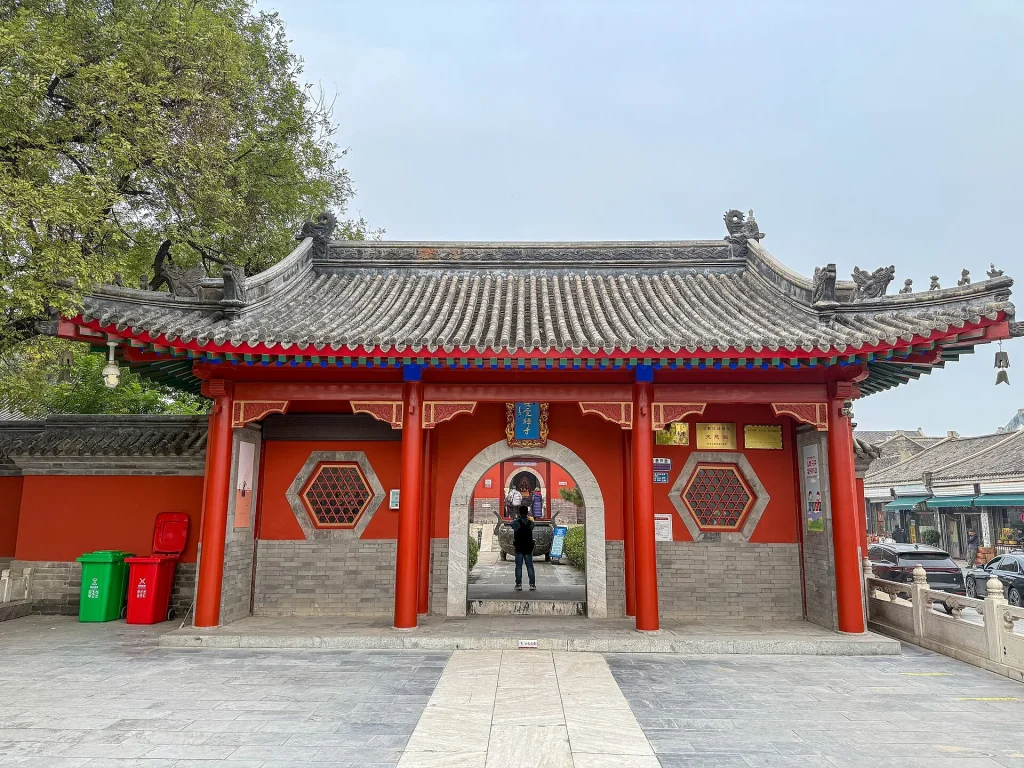
What to notice during a respectful visit
- Street-to-courtyard transition: notice how the complex changes the scale and pace of the surrounding city street.
- Rooflines and painted details: look from a respectful distance rather than leaning on railings or entering restricted areas for a close photograph.
- Visitor rules: treat current notices about photography, worship areas, or indoor access as the final instruction.
- Time of day: softer morning or late-afternoon light can make the exterior easier to photograph without blocking other visitors.
- Local rhythm: the site is more meaningful when paired with a slow walk and one or two well-chosen stops, not an overfilled checklist.
Current checks before you go
Do not rely on fixed opening hours, ticket arrangements, or indoor-access assumptions from old posts. Check a current official Baoding cultural or visitor notice before leaving, especially around public holidays, religious observances, maintenance work, or weather disruptions. If interior access is limited, the exterior, street setting, and nearby old-city sites can still make the stop worthwhile.
Daci Pavilion is most rewarding for travelers who treat it as part of a living old city rather than a standalone photo backdrop. Plan lightly, look closely, and build the day around a few connected Baoding experiences.
Official references and current checks
For Daci Pavilion’s national cultural-relic listing, see the Hebei Provincial Cultural Heritage Bureau list. The Baoding cultural-broadcasting and tourism bureau notice identifies the city’s Daci Pavilion and Ming Shuang Lou management function, while the Hebei Department of Culture and Tourism report places Daci Pavilion among Baoding’s cultural-relic protection sites. Confirm same-day visitor arrangements directly before travel.

Baishi Mountain Guide: Laiyuan Marble Peaks, Hiking Pace and Day-Trip Planning
Plan a thoughtful Baishi Mountain visit from Laiyuan with real trail scenes, marble-peak context, weather-aware pacing, practical preparation,…

Ding Kiln Ruins Quyang Guide: Song White Porcelain, Archaeology and Museum Context
Plan a thoughtful Ding Kiln Ruins visit in Quyang: Song porcelain, the Jianzi archaeological landscape, protection-aware planning, and…
Beiyue Temple Quyang Guide: Northern Sacred Peak Rituals, Dening Hall and Stone Art
Plan a thoughtful Beiyue Temple visit in Quyang with ancient Northern Sacred Peak ritual context, Dening Hall, stone…
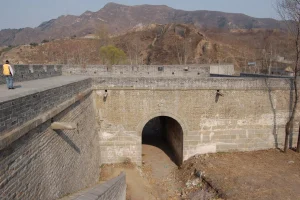
Zijingguan Pass Great Wall Guide: Yixian Gate, Valley Setting and Respectful Visits
Plan a thoughtful Zijingguan Pass visit in Yixian: Great Wall history, the Taihang mountain setting, protection-aware access, and…

Mancheng Han Tombs Guide: Jade Burial Suits, Archaeology and a Thoughtful Baoding Visit
Understand the Mancheng Han Tombs near Baoding: the Lingshan archaeological site, the famous jade burial suits, museum context,…

Ancient Lotus Pond Baoding Guide: Garden History, Lotus Season and Old City Tips
Plan Baoding Ancient Lotus Pond with garden history, lotus season timing, old city route ideas, transport notes, nearby…