
Chengling Pagoda Zhengding Guide: Linji Temple, Zen Heritage and Jin-Era Architecture
Chengling Pagoda is one of the quieter major monuments in Zhengding, just north of Shijiazhuang. It stands inside Linji Temple on Yanzhao South Street, a compact landmark with a long religious and architectural history. For visitors who have already heard of Longxing Temple, this is a more focused stop: a solid brick pagoda, a living temple setting, and a chance to look closely at the way a historic tower is composed from base to finial.
The Chinese name to keep on your phone is 临济寺澄灵塔 (Linji Temple Chengling Pagoda). Do not confuse it with the much taller-looking towers elsewhere in Zhengding, or expect an open interior climb. The value of this visit is in observation: the octagonal footprint, carved base, false doors and windows, changing bracket forms, stacked eaves, and the story of conservation that has allowed the tower to remain part of the ancient city.
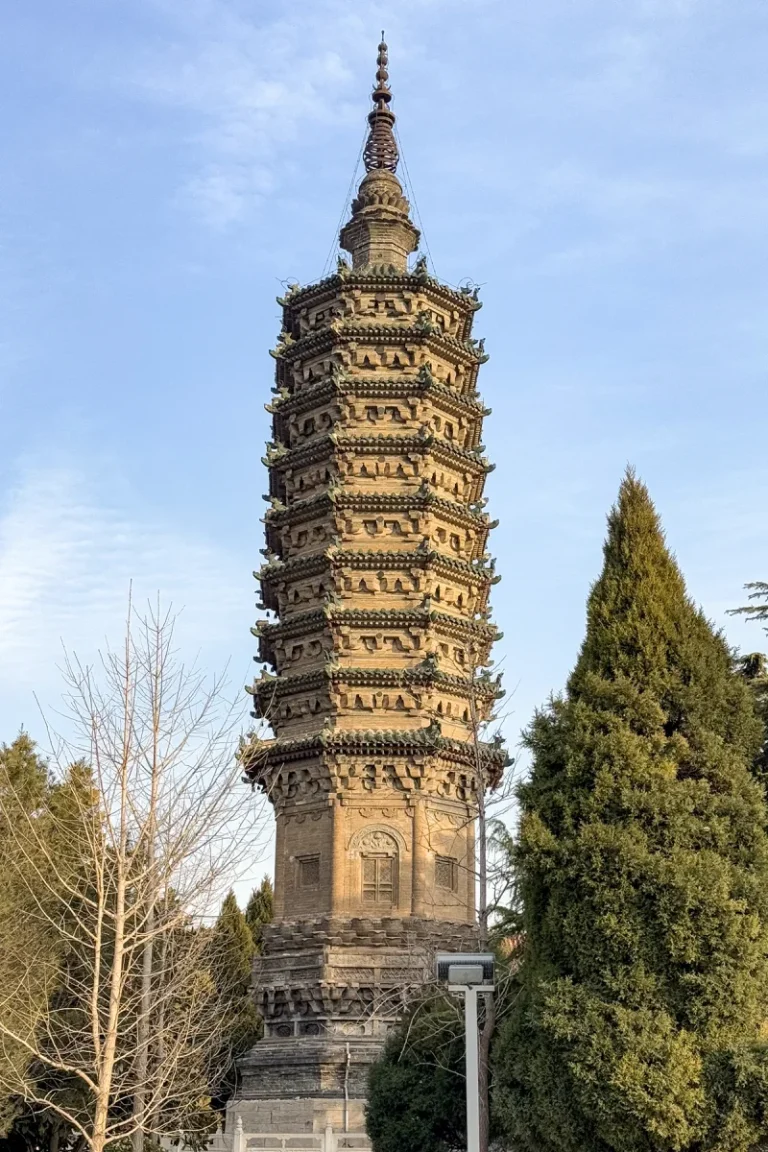
Why Chengling Pagoda matters
The Hebei Provincial Cultural Relics Bureau identifies Chengling Pagoda as a Jin-period ancient building and a national-level protected cultural-relic site. Its account says the pagoda was first established in 867 to enshrine the robe and bowl associated with Master Yixuan, the founding figure of the Linji school of Chan Buddhism. It was extensively repaired in 1185, followed by repairs in the Yuan, Ming, and Qing periods. The present exterior preserves the form established after the Jin rebuilding.
This is a useful distinction for a careful traveller. The site has a Tang foundation story, but what you are looking at is not an untouched ninth-century object. It is a monument with layers of intervention. The official record also notes that the finial was damaged in the 1966 earthquake and that nine levels were dismantled and rebuilt in 1985 before the finial was reinstalled. That repair history is not a weakness; it is part of what makes the pagoda an honest lesson in how heritage survives.
What to notice from the ground
At 30.47 metres high, Chengling Pagoda is not the tallest landmark in the Zhengding tower group, but it rewards slow looking. The plan is octagonal and the brick structure is solid rather than a hollow climbing tower. Begin at the base: the double Sumeru-style pedestal is densely carved, and the tower body rises from a lotus-shaped support. Look for the contrast between the four principal faces, which use carved arched doors, and the diagonal faces, which use false windows.
Then look upward one storey at a time. The bureau describes eight levels of imitation-timber eaves, with bracket sets that change in form across the levels. You do not need specialist architectural vocabulary to enjoy it. Stand back far enough to see the silhouette, then take a closer look at the eaves, corner details, and green-glazed roof-edge elements. The apparent repetition is deliberate: each tier builds a rhythm while slight changes stop the tower from reading as a simple stack.
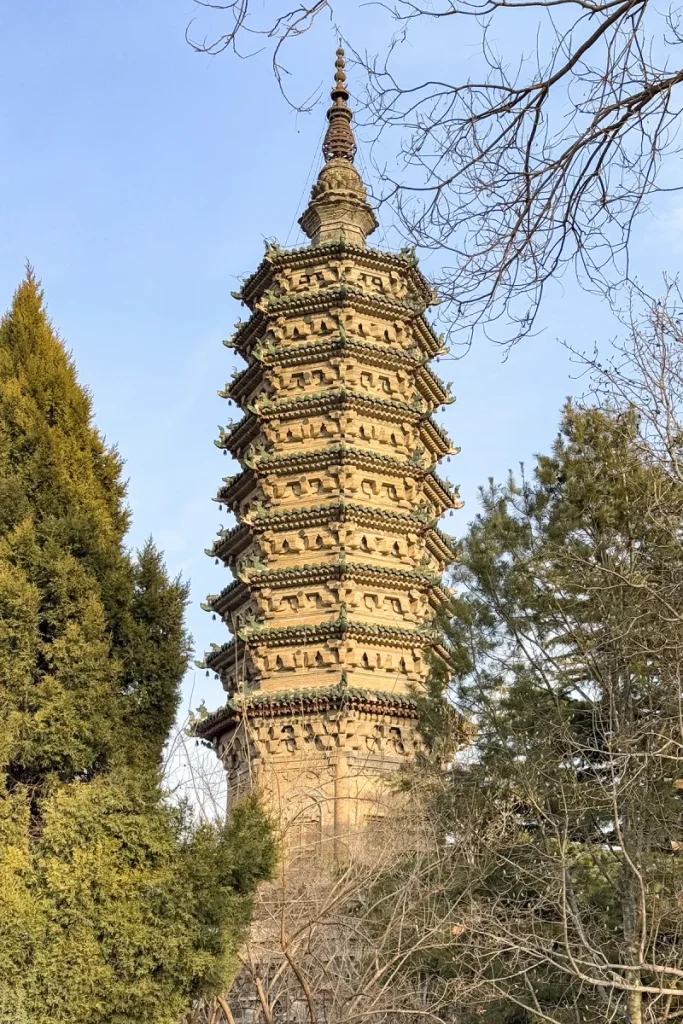
Linji Temple and Zen heritage
Linji Temple gives the pagoda its wider context. Yixuan, known in Chinese as Linji Yixuan, is associated with the Linji school, which later developed as Rinzai in Japan. For an international visitor, that connection helps explain why a small Zhengding temple can matter well beyond the county. The strongest way to approach the site, however, is respectfully rather than as a checklist of religious labels: it is a temple setting, a protected monument, and a place where visitors should keep voices low and follow current onsite guidance.
A broad Zhengding itinerary works best when each site keeps its own identity. Longxing Temple is the right place for large Song-period halls, Buddhist sculpture, and a fuller temple complex. Chengling Pagoda is better for studying one vertical monument in close detail. The older Zhengding Ancient City guide helps place both within an ancient-city walk, while the night-walk guide is useful only after you have treated the heritage sites as daytime priorities.
How to plan a thoughtful visit
- Visit in daylight: the eaves, carved base, and stone protection marker are easier to read in clear light than at night.
- Keep the stop focused: allow time to walk around the tower and temple grounds instead of treating it as a quick roadside photograph.
- Check current access before departure: opening times, entry arrangements, photography rules, religious activity, repairs, and temporary closures can change.
- Dress and behave for a temple: avoid intrusive posing, keep drones away unless explicitly permitted, and give worshippers and residents space.
- Pair nearby sites realistically: Longxing Temple and Zhengding’s other towers are close in the wider old-city area, but each deserves more than a rushed exterior stop.
From central Shijiazhuang, Zhengding is best treated as a separate half-day or full-day heritage outing rather than a gap between unrelated city appointments. The Shijiazhuang first-time guide gives broader city context, and the Beijing to Shijiazhuang train guide is useful for the intercity rail leg. For local transport, check a current map and a same-day navigation service. Do not rely on an old blog for temple hours, tickets, or the exact entrance.
How this pagoda differs from Zhengding’s other towers
Zhengding is often described through a group of major towers, and that can make individual sites blur together in a fast itinerary. Chengling Pagoda is the Linji Temple monument with a clear Chan-Buddhist lineage and a compact Jin-era exterior. The Hebei culture-and-tourism department lists it alongside the towers at Guanghui, Kaiyuan, and Tianing temples, each with its own construction history and visual character. Rather than choosing a “best” tower, use the differences to create a better route: a temple hall at Longxing, a pagoda at Linji, and one or two more sites only if time remains.
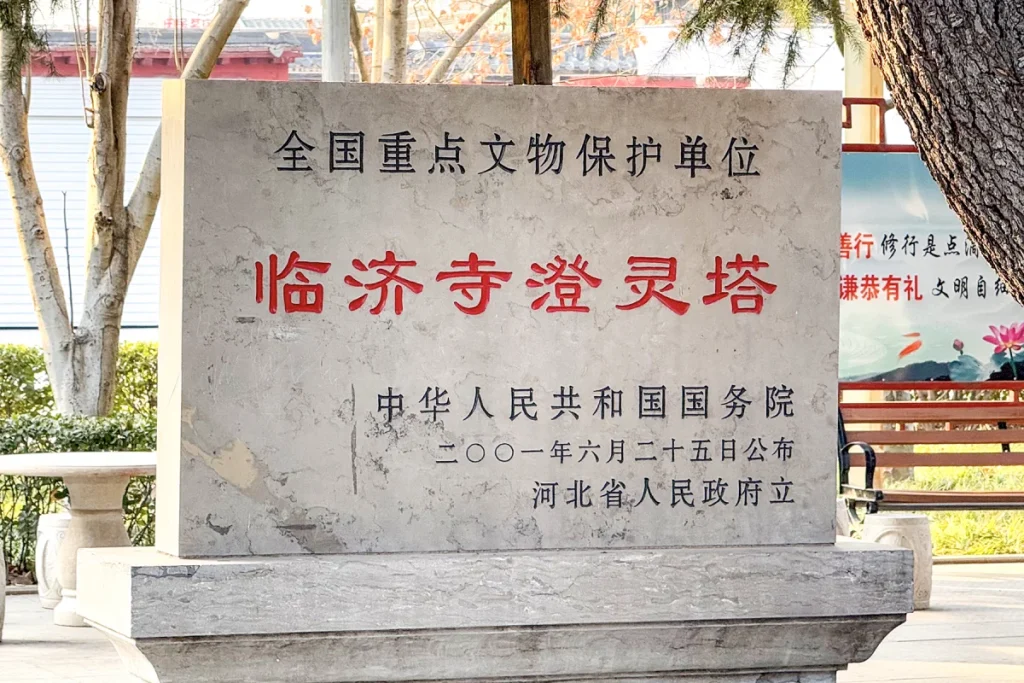
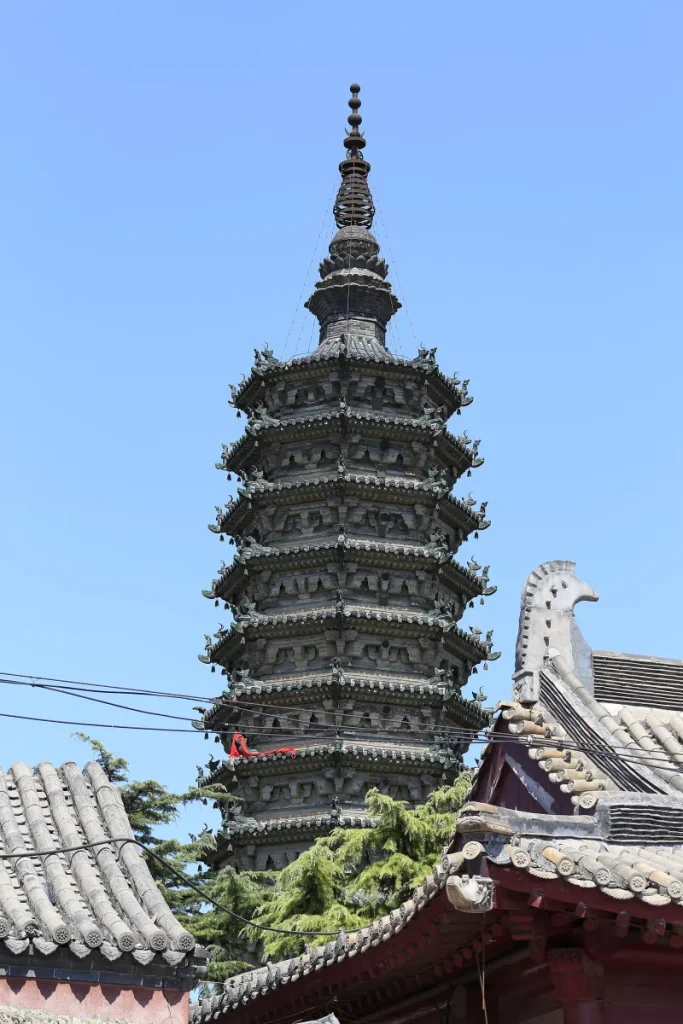
That approach also produces better photographs. A wide view gives the tower its setting; a closer image shows the layered eaves; the protection stele explains why careful treatment matters. None of these photos should be substituted for a visit to the real monument, and none should be presented as a guarantee of current access or light conditions. They are here to help you recognise the right site and to show that the page is based on real, traceable scene photography rather than AI imagery.
A short route through Zhengding
- Start with one major temple: choose Longxing Temple if you want the broadest architectural and art-historical introduction.
- Walk or transfer to Linji Temple: use Chengling Pagoda as the focused monument of the day; circle it slowly and read the base and eaves.
- Choose one additional tower only: more stops do not automatically produce more understanding.
- End in the old city: have a meal or take an evening walk after the heritage sites, without confusing modern commercial streets with historic fabric.
Official references and current checks
For the authoritative history, date, dimensions, material, repair record, and architectural description, see the Hebei Provincial Cultural Relics Bureau listing for Chengling Pagoda. For the pagoda’s place among Zhengding’s protected monuments, see the Hebei Department of Culture and Tourism heritage account. Confirm same-day visitor arrangements through current official local notices or the site itself before travel.
Chengling Pagoda is ideal for travellers who value a specific, well-documented monument over a long attraction list. Its Tang origin story, Jin-period exterior, later repairs, and temple context make it a compact but serious stop. Visit it with time to look, use real sources when checking practical information, and let the rest of Zhengding unfold at a measured pace.
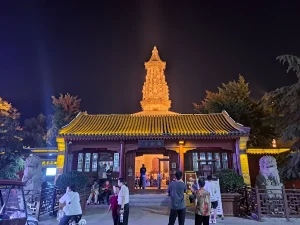
Guanghui Temple Hua Pagoda Guide: Zhengding’s Flower Tower and Old-City Walk
Look closely at Zhengding's Hua Pagoda: sculpted figures, corner towers and brick details, with a relaxed old-city route…
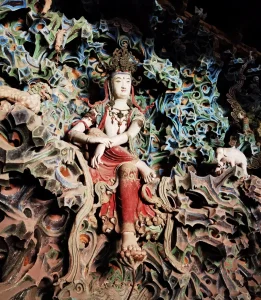
Longxing Temple History: Zhengding Buddhist Architecture and Heritage
Understand Longxing Temple in Zhengding through Buddhist architecture, sculpture, heritage layers, old-city context, and how to view the…
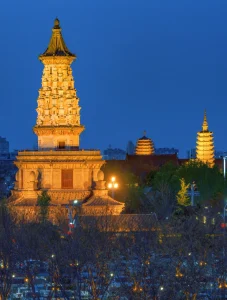
Zhengding Ancient City Guide: Temples, Towers and Old Streets
Decide how to visit Zhengding Ancient City near Shijiazhuang, including Longxing Temple, old streets, food, night walks, travel…
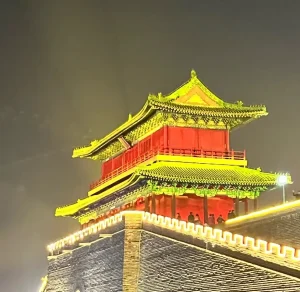
Zhengding One-Day Itinerary from Shijiazhuang: Temples and Old City
Use this Zhengding one-day itinerary from Shijiazhuang to plan Longxing Temple, old streets, local food, towers, night walk…
Longxing Temple Zhengding Travel Guide: Route, Highlights and Tips
Plan a Longxing Temple visit in Zhengding with route order, time budget, transport checks, food pairing, and practical…
Rongguo Mansion Zhengding Guide: Dream of Red Mansions Filming Set
Visit Rongguo Mansion in Zhengding: explore its Dream of Red Mansions filming history, courtyard route, Rongxi Hall, Yi…