
Cangzhou Iron Lion Guide: History, Photos and Grand Canal Day Trip Tips
The Cangzhou Iron Lion is the kind of Hebei landmark that deserves more than a quick line in a day-trip list. It is massive, unusual, and very different from the temples, gardens, beaches, and mountain routes that many travelers associate with northern China. If you are building a Cangzhou route from Beijing or Tianjin, this iron monument gives the city a clear historical anchor.
The Chinese name is 沧州铁狮子. You may also see it translated as Iron Lion of Cangzhou or Cangzhou Iron Lion. The object is commonly dated to 953, during the Later Zhou period, and is widely discussed as one of China’s outstanding ancient cast-iron works. For route planning, pair this page with the Beijing to Cangzhou train guide if you are coming by rail.
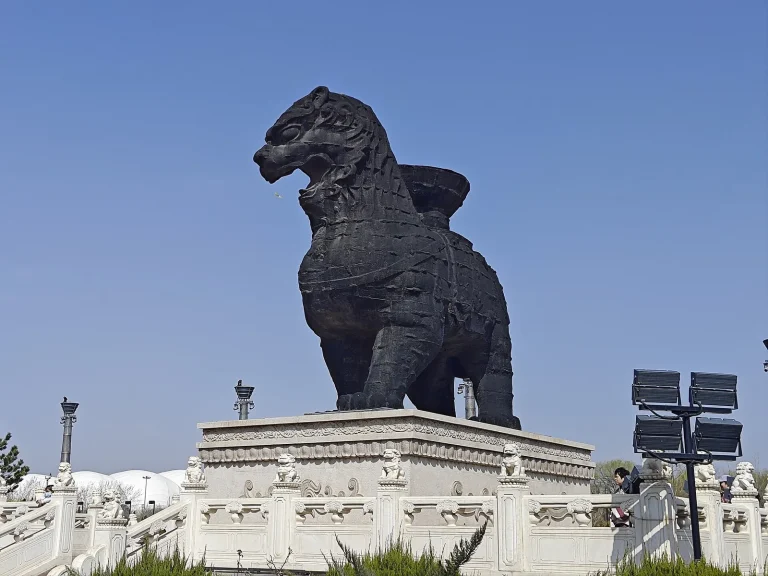
Why the Cangzhou Iron Lion matters
The iron lion matters because of its age, size, material, and survival. Ancient Chinese bronze works are easier for visitors to imagine, but large cast-iron monuments are rarer in the tourist imagination. The Cangzhou Iron Lion shows that northern China had advanced iron-casting traditions long before modern industry. It is not simply a local mascot; it is a technical and cultural object that helps explain why Cangzhou is sometimes called Lion City.
China.org.cn describes the iron lion as a major cultural relic of Cangzhou, while Science and Technology Daily has used it as an example when discussing ancient Chinese iron casting. These are useful clues for visitors: do not visit expecting a polished museum sculpture. The value lies in the material presence, the weathered surface, the scale, and the fact that it has been repeatedly interpreted, repaired, and protected over time.
What to look for when you visit
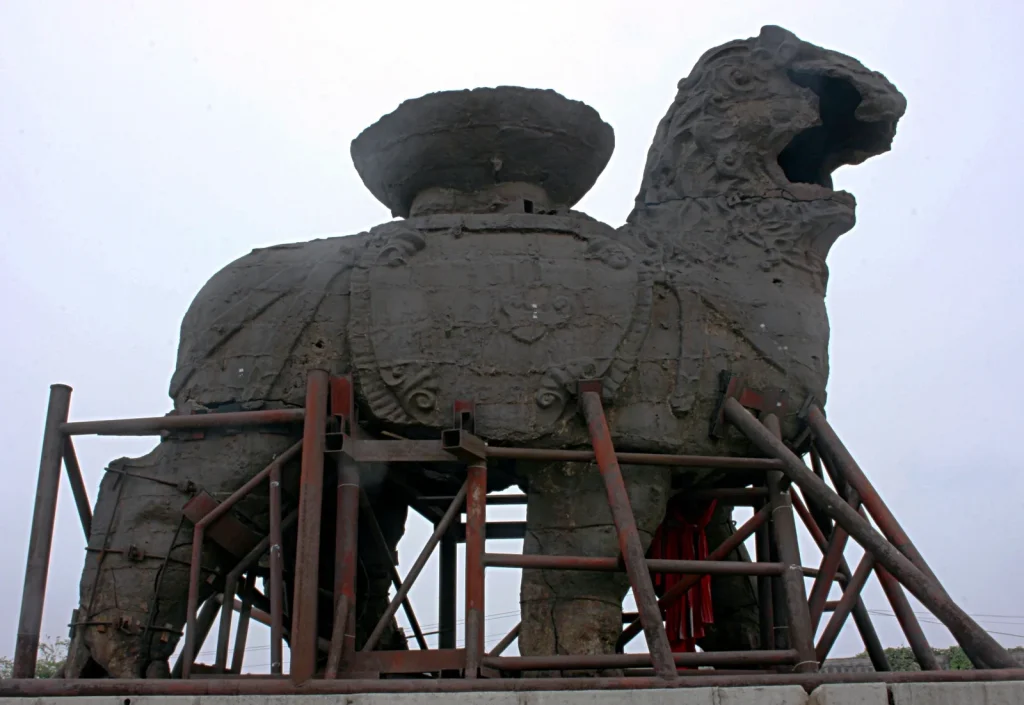
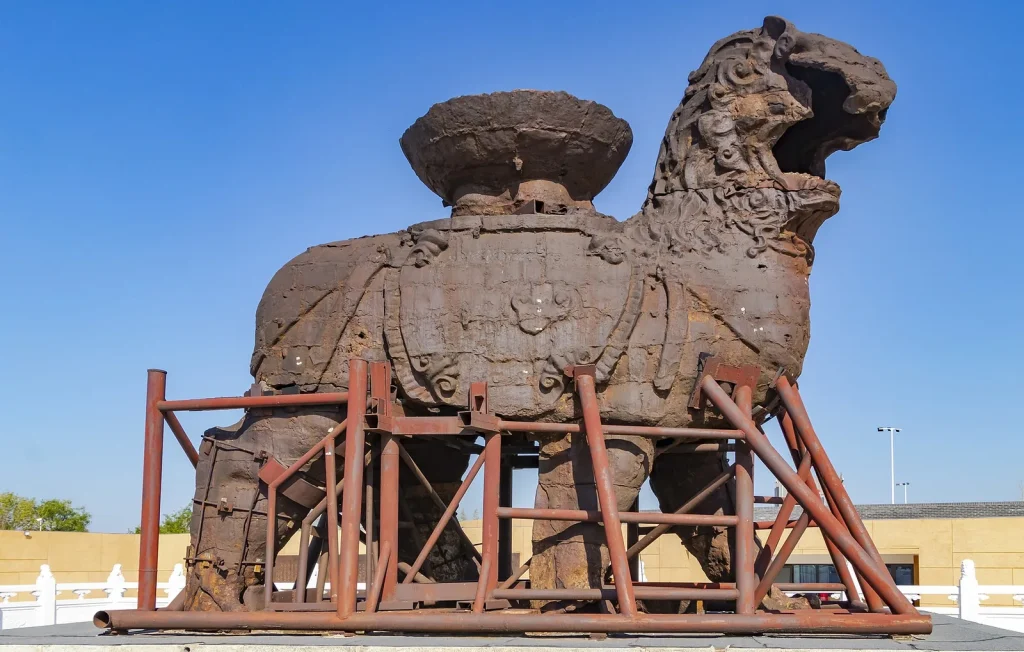
Start by standing far enough away to understand the overall form. Then move closer and look at the body surface, the saddle-like upper section, the mouth, legs, and the supporting structure around it. Depending on lighting and access rules, the lion may photograph better from the side than from directly in front. The best visit is not just a selfie stop; it is a slow look at how a very old iron object has endured outdoors.
- Overall scale: step back first so the size and posture are clear.
- Surface texture: look for casting marks, weathering, and repaired or supported areas.
- Side profile: often easier for photos than a crowded front angle.
- Conservation context: notice that survival itself is part of the story.
How long to spend
The Iron Lion does not require a long visit by itself. Most travelers need about 30 to 60 minutes, depending on whether they are only stopping for photos or reading the site more carefully. The better question is not “how long does the lion take?” but “what should I combine it with?” The answer is usually a Cangzhou old-city or Grand Canal route rather than a single-object trip.
If you are coming from Beijing, do not spend the whole day only on the Iron Lion. Use it as the most memorable stop in a wider Cangzhou plan. The existing Cangzhou day trip guide is useful for combining the Iron Lion with Grand Canal culture, local streets, and food without rushing blindly between disconnected stops.
Best time and photo conditions
Clear weather helps because the iron surface can look flat under dull light. Morning or late afternoon is usually better than harsh midday sun, especially if you want side shadows and texture. In summer, Cangzhou can be hot, so an early visit is more comfortable. In winter, the site may feel quiet and stark, which can work well for photos if the sky is clear.
How to fit it into a Cangzhou day trip
A practical first-time route is to arrive in Cangzhou, visit the Iron Lion as the historical anchor, then connect it with Grand Canal-related stops or a compact old-city walk. Cangzhou is not as internationally famous as Chengde or Qinhuangdao, so the trip works best when you treat it as a focused cultural side trip rather than a checklist of famous national icons.
If you are planning a broader Hebei rail route, Cangzhou can pair with nearby plain-city stops, but do not overload the day. For travelers comparing other Beijing-based outings, the Beijing to Tangshan train guide and Beijing to Baoding day trip guide show how different Hebei city trips can feel: industrial renewal, old administrative culture, Grand Canal heritage, or ancient metalwork.
Transport and practical notes
Use 沧州铁狮子 in Chinese map apps for navigation. Cangzhou has more than one rail-related transfer point, so confirm your arrival station before deciding whether to take a taxi, ride-hailing car, or local transport. For foreign visitors, a taxi or ride-hailing transfer is usually the simplest way to keep the day predictable.
Check current opening arrangements, ticketing, and site access locally before making a tight train plan. Cultural relic sites can change display routes, protective barriers, or access rules, and older English descriptions may not reflect the current visitor setup.
Visitor tips before you go
- Use 沧州铁狮子 in Chinese map apps rather than relying only on the English name.
- Plan the Iron Lion as part of a Cangzhou city route, not as the only reason for a long trip.
- Look at the surface and support structure, not only the front view.
- Check current site access before building a very tight train schedule.
- Combine it with Grand Canal culture if you want the day to feel more complete.
References and image sources
For non-commercial context, useful references include the China.org.cn page on the Cangzhou Iron Lion and Science and Technology Daily’s English article discussing ancient Chinese iron casting. Page images use Wikimedia Commons files including Cangzhou Iron Lion 20260322, Iron Lion of Cangzhou 2007, and Cangzhou Iron Lion 2020.
Wuqiao Acrobatics Guide: Cangzhou Acrobatics World, Shows and Day Trip Tips
Plan a Wuqiao Acrobatics trip in Cangzhou with Wuqiao Acrobatics World, show priorities, culture context, Beijing train logic,…
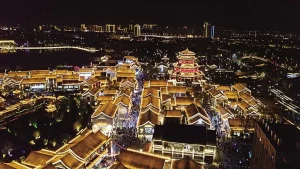
Cangzhou Nanchuan Old Street Guide: Grand Canal Walks, Food and Night Views
Plan an evening and morning around Cangzhou Nanchuan Old Street, with Grand Canal views, heritage context, food stops…
Cangzhou Day Trip: Iron Lion, Grand Canal and Old City Culture
Plan a Cangzhou day trip around the Iron Lion, Grand Canal context, local culture, city food, transport timing,…
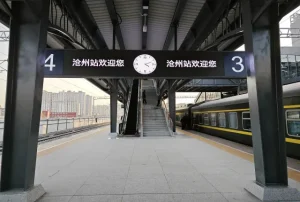
Beijing to Cangzhou Train Guide: Stations, Iron Lion and Grand Canal Tips
Plan a Beijing to Cangzhou train trip with station choices, Iron Lion, Grand Canal context, city transfers and…
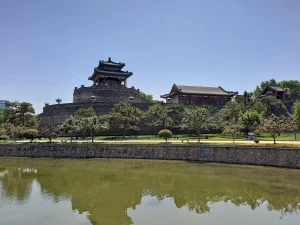
Congtai Park Handan Guide: Wuling Terrace, Seven Sages Shrine and City Walk
Explore Congtai Park in central Handan: Wuling Terrace, the Seven Sages Shrine, lake paths, Zhao history and a…
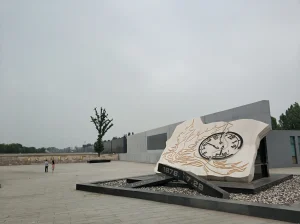
Tangshan Earthquake Memorial Park Guide: Museum, Memorial Wall and 1976 Ruins
Visit Tangshan Earthquake Memorial Park with context: the memorial wall, preserved industrial ruins, the 2026 museum reopening and…